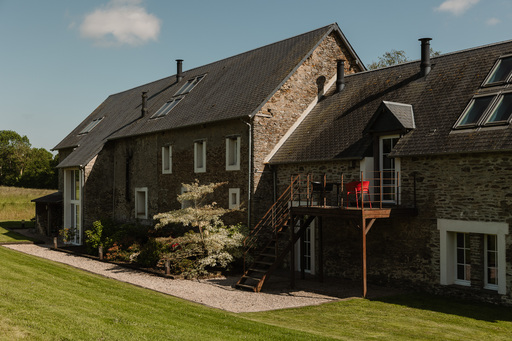
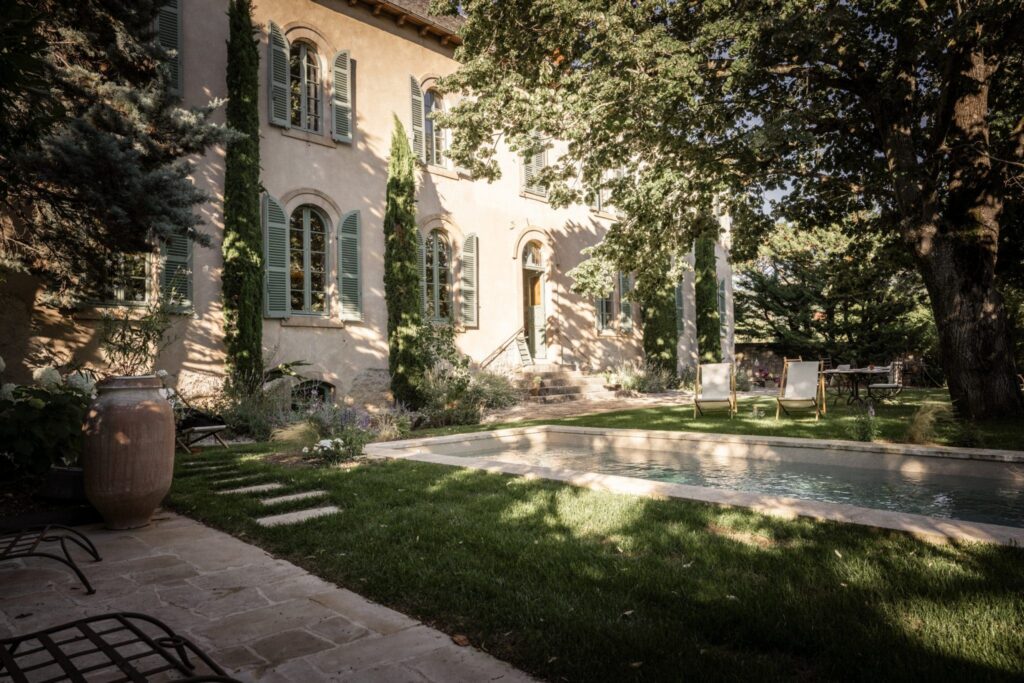
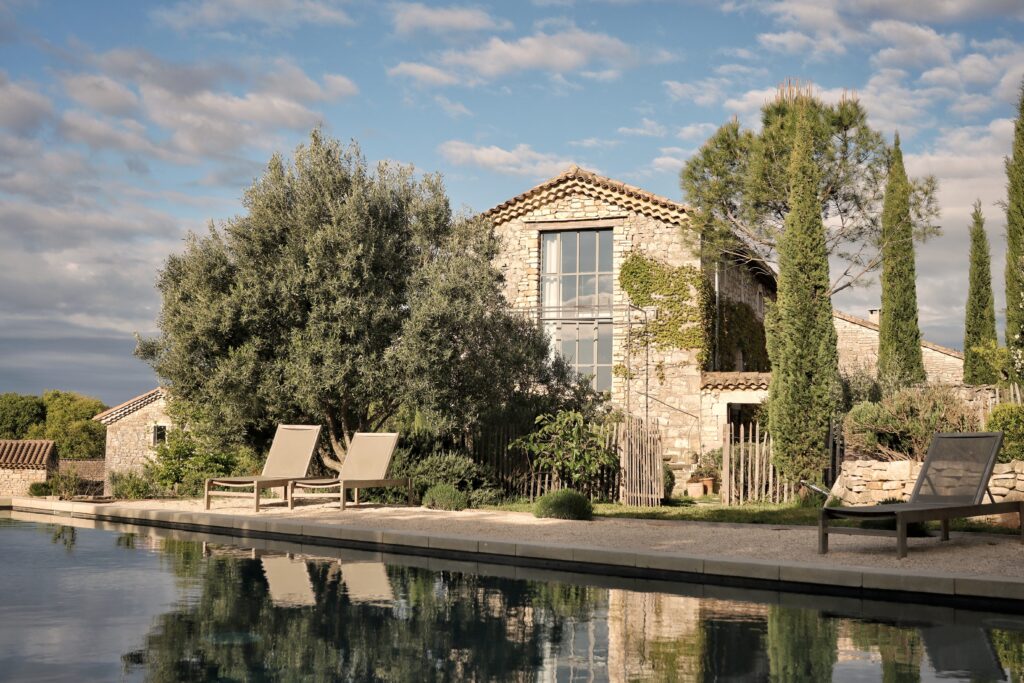
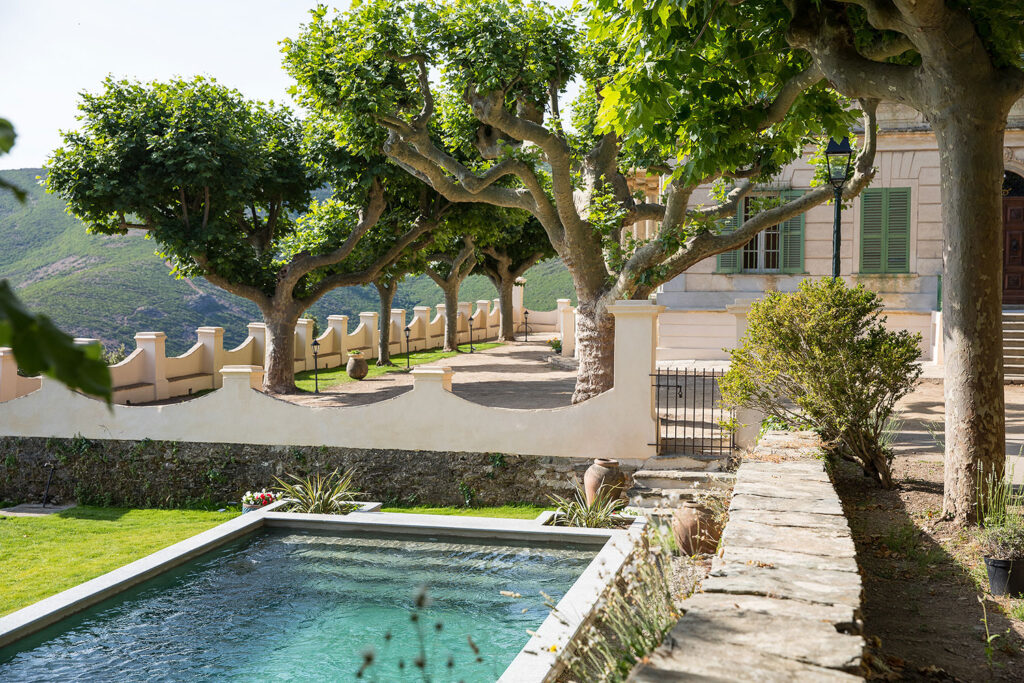
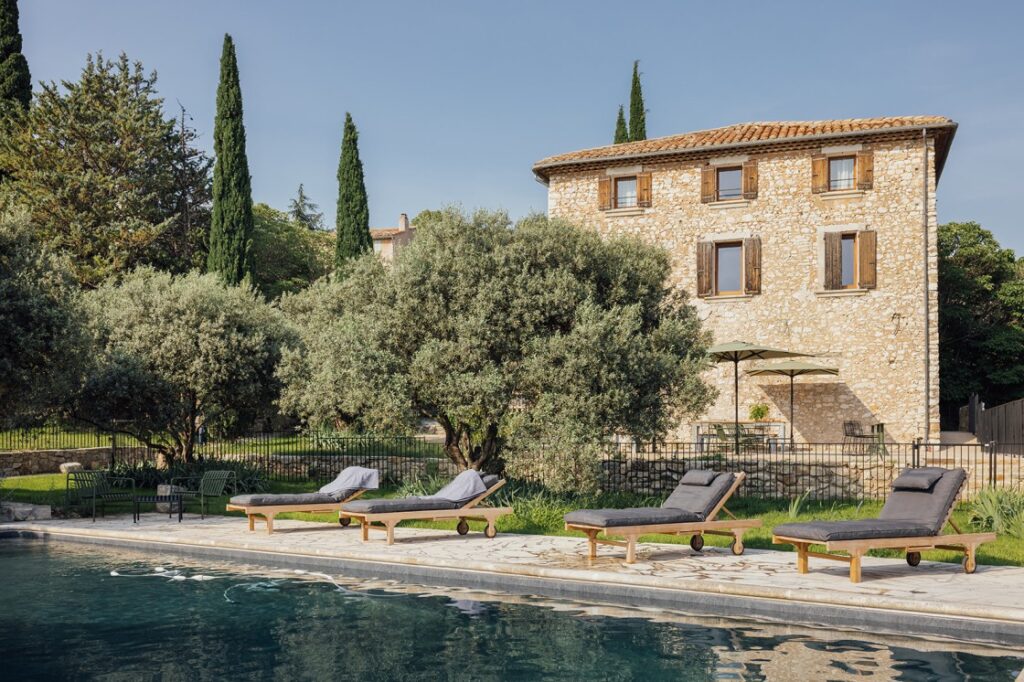
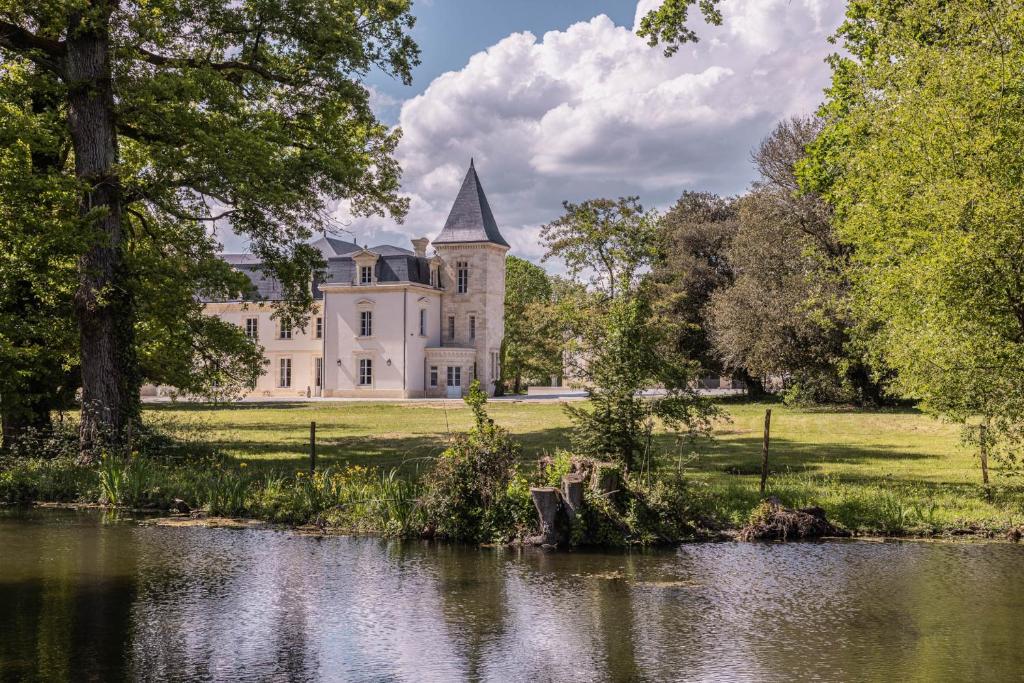
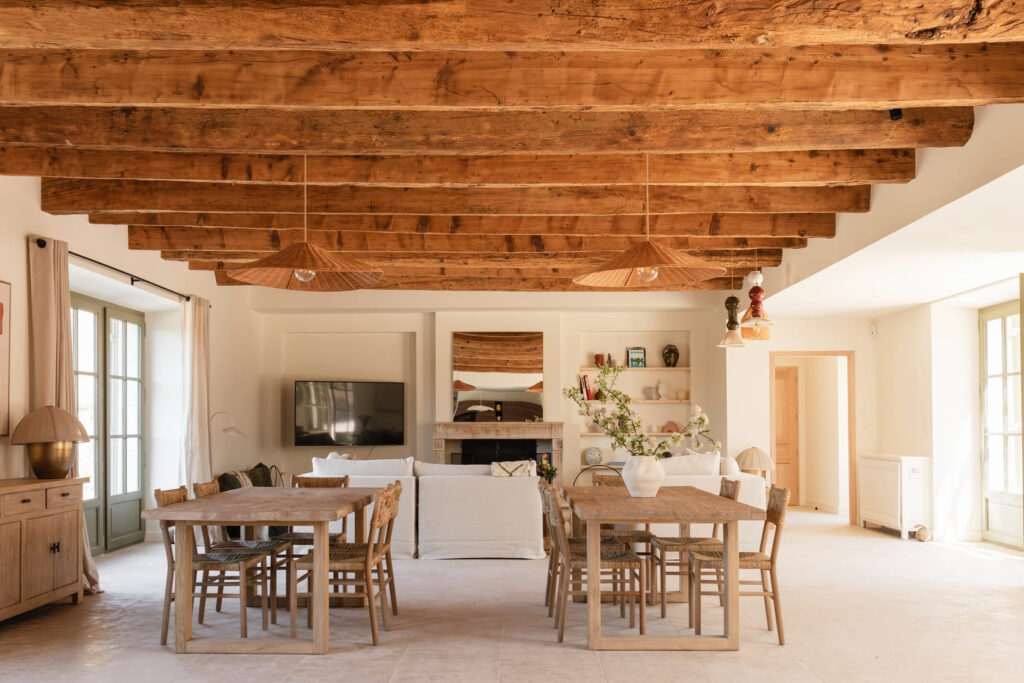
Château de Sibra sits in Lagarde, a quiet part of Occitanie between Toulouse, Carcassonne and the first foothills of the Pyrenees. Mirepoix is only a short drive away, but the estate feels set apart: a château, farm buildings, a hamlet, a lake, a park, and views that open towards the mountains.
The place has been many things before becoming a guesthouse. It was once linked to the Abbey of Camon, then passed through several local families before being bought in 1878 by Joseph Villary de Fajac, a Parisian railway entrepreneur, and his wife Pauline. They are the reason Sibra looks the way it does today. They took an older fortified property and turned it into something much more unusual: part château, part model farm, part romantic landscape. The farm buildings, stables, granary, courtyard, lake, park and small architectural follies were all part of that same idea.
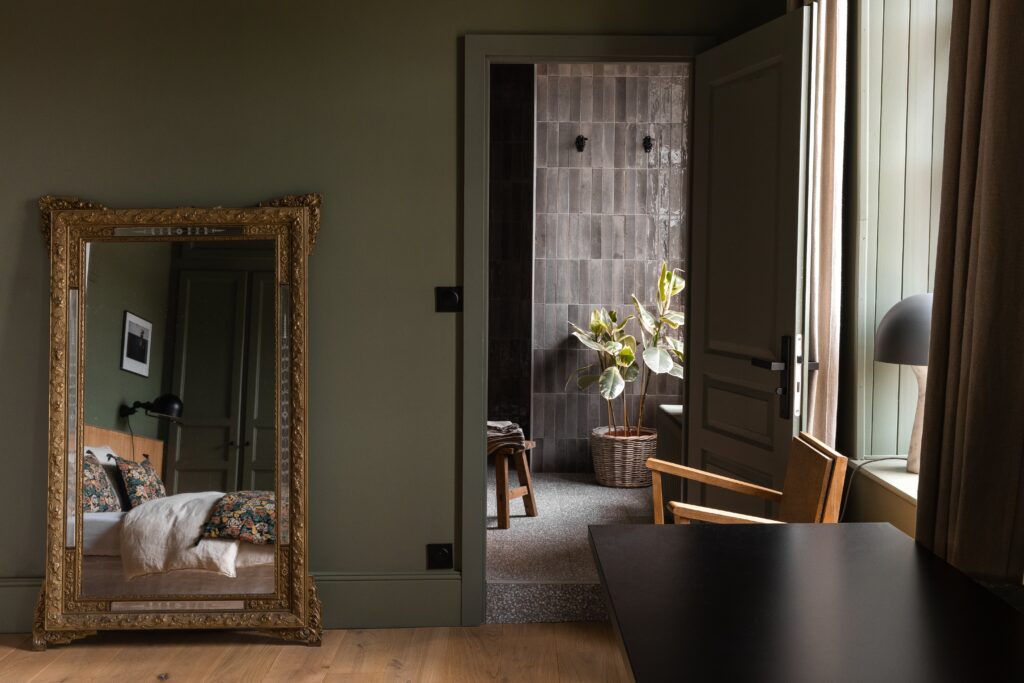
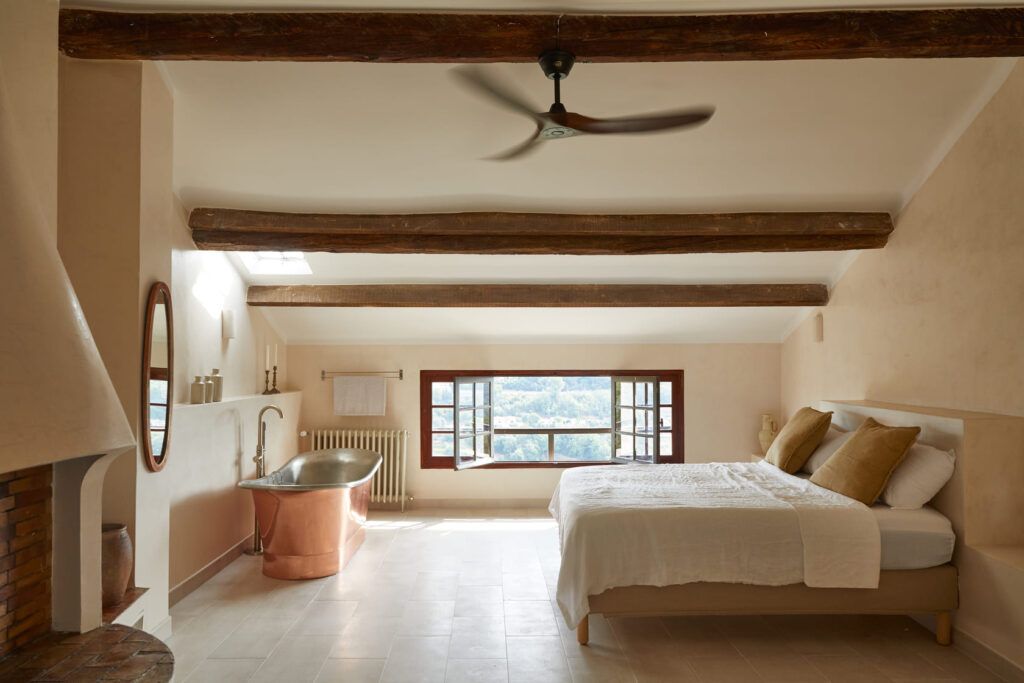
When Swiss architect Sibylle Thomke first saw Sibra in 2017, the park had become wild, the lakes were dry, and owls were living in the roof. But much of the original house was still there: old floors, painted walls, wallpapers, door handles, tiled stoves, woodwork, strange details from another century. She began the restoration in 2018 and opened the estate to guests in 2021. The work is careful, but not museum-like. Old wallpapers have been reproduced, damaged elements repaired, and new bathrooms added as light, removable structures. The result keeps the château’s oddness intact — and that is the best thing about it.