DESIGN

La Maison
d'Ambronay

Ambronay - France

Four very spacious rooms inside Ambronay’s former primary school, with long breakfasts, vintage finds and the Bugey countryside close by.

Adults Only

Adults Only

Icon Village

Village Life

Orchard

Orchard

Library

Library

Fireplace

Massage

Promenade

Promenade

THE SETTING

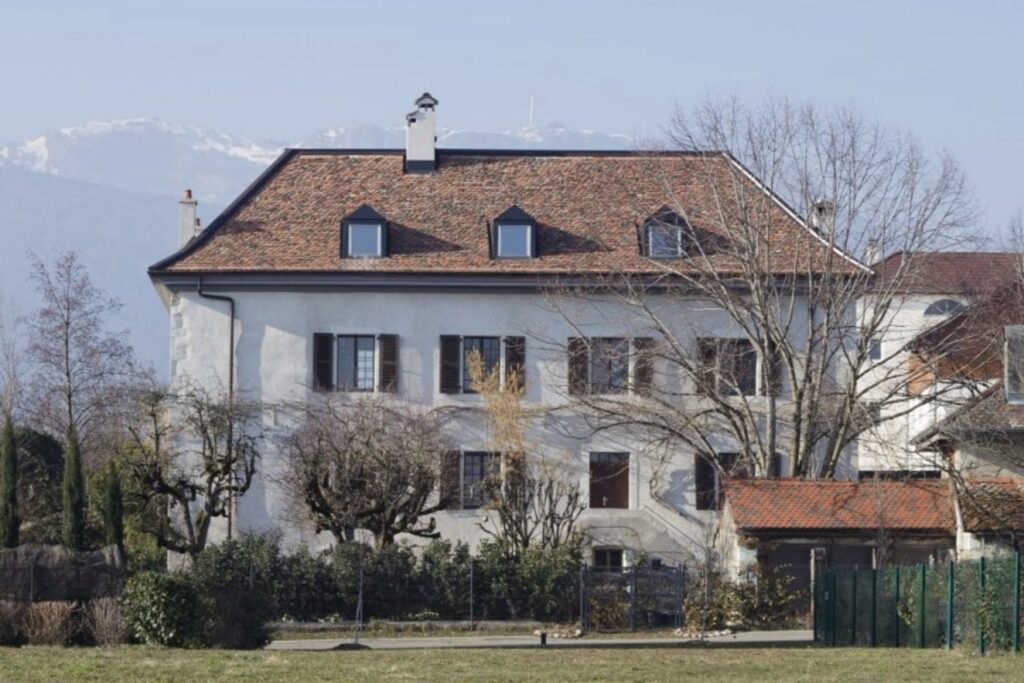
La Maison d’Ambronay stands on the village’s Grande Rue, facing the abbey and only a few steps from the old centre. From outside, it still looks very much like the school it once was: a substantial village building, tall windows, a broad corridor and the former playground behind. The René Cassin primary school closed because it had become too small for the village. Nathalie discovered it in 2015, after spending a year looking for the right place to begin a different life. She kept the structure and much of its character, then reworked its classrooms, teachers’ room and communal spaces into a four-room guesthouse.
 
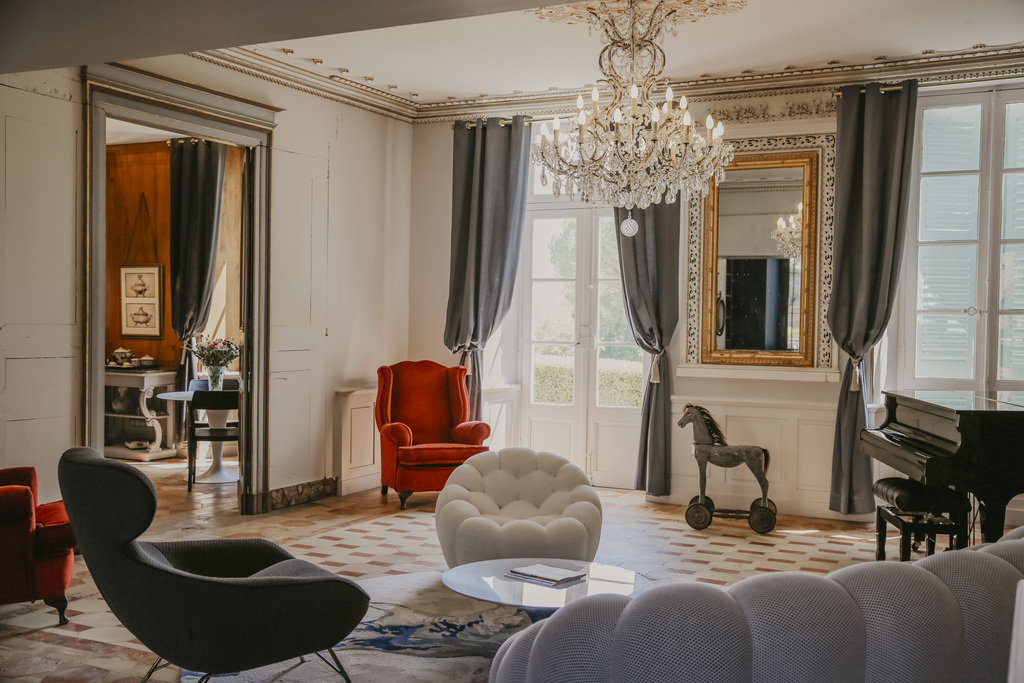
The school references remain, though the result never feels like a theme hotel. Old desks, chalkboards, globes, children’s books and classroom furniture are mixed with Art Deco pieces, antiques, contemporary objects and the many things Nathalie has found while searching markets and brocantes. The scale of the building helps. With around 1,000 m² and only four bedrooms, there is space everywhere: wide corridors, large rooms, a glass-roofed patio, communal tables and a courtyard shaded by plane trees.

THE ROOMS

The four rooms are called CE1, CE2, CM1, and CM2, after French primary school classes. Each occupies a former classroom, so proportions are unusually generous. High ceilings, big windows and proper sitting areas make them somewhere to spend time rather than simply sleep.
 
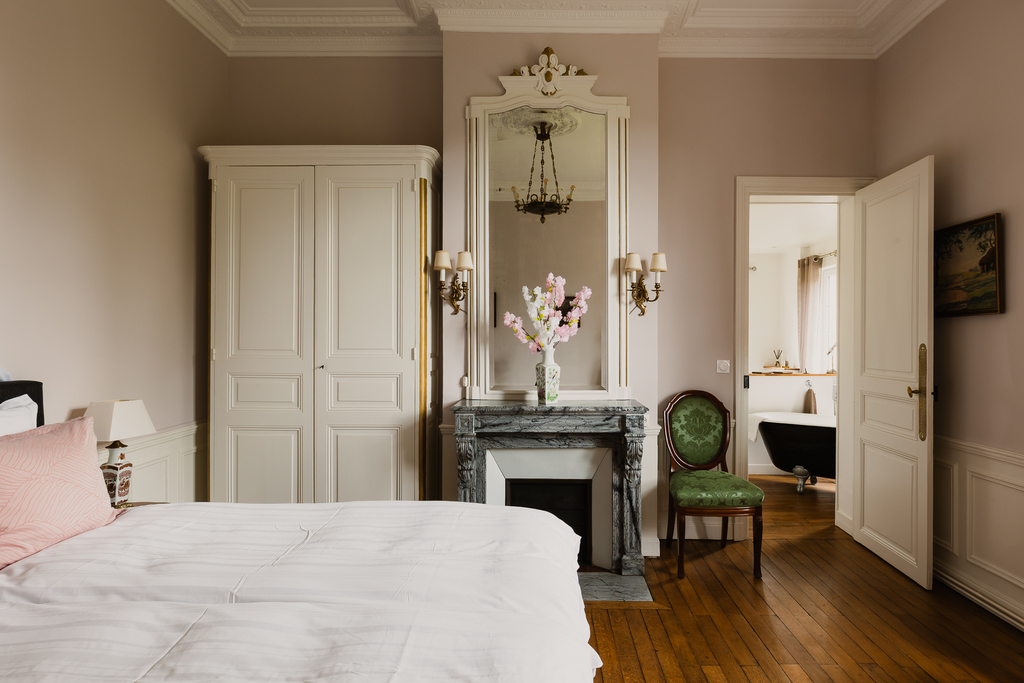
CE1 is the family room, with two large double beds and an alcove furnished with old school desks and books. Its tiled bathroom takes its cues from a vintage swimming-pool changing room — one of the house’s more playful details. CE2 has a softer Art Deco mood, with powder-pink tones, a writing desk, old photographs and a small balcony overlooking Ambronay’s château and orangery. CM1 and CM2 face the former playground and garden. Both have sitting areas and large bathrooms with a bathtub and shower. 

THE FOOD

Breakfast is served around the long communal table, in the former CP classroom, or outside in the playground when the weather is good. It is closer to a small brunch than a quick continental breakfast: bread, pastries, old-fashioned brioche, fruit, yoghurt or fromage blanc, local cheeses, cold cuts, eggs, juice, coffee and tea. Nathalie sources part of the produce from nearby farms and independent suppliers, including a local producers’ cooperative outside the village.
 
The room itself is half the pleasure. There is an old grocery counter, mismatched chairs, collected crockery and a pinball machine nearby. Guests tend to stay longer than planned, which is usually a good sign.
 
La Maison d’Ambronay has no regular restaurant. Dinner requires going out, although that is particularly easy here: the Auberge de l’Abbaye sits directly opposite, and Nathalie keeps a very good list of alternatives around Pont-d’Ain, Cerdon, Bourg-en-Bresse and the surrounding villages.

THE STAY

The old school spaces give the house more life than a conventional four-room guesthouse. The teachers’ room has become a sitting room. The covered playground has table tennis and table football. Outside, the original courtyard remains a place to sit beneath the plane trees, read, have a drink or do absolutely nothing useful for the rest of the afternoon. There is also a bright internal patio beneath a glass roof, making it easy to retreat when the weather changes. That makes La Maison d’Ambronay work year-round rather than just as a summer address.
 
The house suits several kinds of stay: a weekend built around the abbey and a good dinner, a stop between Lyon and the Alps, a few days discovering the Ain, or a private gathering using all four rooms.

AROUND LA MAISON D'AMBRONAY

The Abbey of Ambronay is directly across the street. Founded around the year 800, it includes a Gothic cloister, abbey church and gardens. It remains an active cultural centre, with concerts and artist residencies throughout the year.
 
The annual Ambronay Festival is the major event. Each autumn, the abbey becomes one of Europe’s important meeting points for Baroque and early music. Staying opposite means walking home after a concert rather than joining the traffic leaving the village.
Beyond the abbey, the wider Ain is worth exploring. The region sits between the Bugey hills, the Dombes wetlands and the first Jura landscapes, giving you vineyards, rivers, lakes and old villages within relatively short drives.
 
Cerdon is known for its lightly sparkling rosé, traditionally produced using an ancestral fermentation method. Montagnieu has its own sparkling white wines, while the surrounding Bugey vineyards remain far quieter than France’s more famous wine regions.
Oncieu is memorable for its houses arranged in a near-perfect circle around an old meadow. Jujurieux preserves the industrial history of the Bonnet silkworks, and the Château des Allymes sits above the valley in a commanding position shaped by the old frontier between Dauphiné and Savoy.
 
For outdoor days, the Ain and Albarine rivers offer swimming, fishing, canoeing and picnic spots. The lakes of Nantua and Sylans offer good longer excursions, while the Plateau de Retord offers hiking, cross-country skiing, and snowshoeing, depending on the season.


THE OWNERS

La Maison d’Ambronay is Nathalie Schlienger’s project from beginning to end. Before moving here, she ran her family’s printing business in Lyon. The school offered the chance to change direction while still using the skills she already had: visual judgement, attention to detail, organisation and a very good eye for objects. She completed the renovation in about a year and opened four rooms rather than trying to fill the entire building. That decision gives the house its generosity and allows her to host personally.
 
Nathalie is also genuinely useful when planning the stay. She knows the restaurants, markets, swimming places, vineyards, brocantes, walking routes and small addresses around the Ain, and her recommendations are more specific than the usual tourist-office list.

GOOD TO KNOW

La Maison d’Ambronay has four rooms and can accommodate up to ten guests. The rooms are large — between 50 and 60 m² — and all have private bathrooms. CM1 and CM2 include both a bathtub and a shower. CE2 has a balcony, while CE1 is the most suitable option for families.
 
The house has no regular restaurant, but several good dining options are available nearby, including one directly opposite. The bedrooms do not have air conditioning. Pets are not accepted. Arrival should be arranged with Nathalie in advance. Check-in is generally from 5:30pm, and check-out is by 11am.
 
Rates start at €150 per night, depending on the room and dates.

THE ADDRESS

La Maison
d'Ambronay

46 Grande Rue
01500 Ambronay
France

CONTINUE IN FRANCE

Château du Gué aux Biches, Normandie, France
Bagnoles de l'Orne - France
Number 5 - Saint-Paul de Vence - Provence, France
Saint-Paul de Vence - France
Chateau Laffitte Carcasset, Nouvelle Aquitaine, France
Saint-Estèphe - France
Guesthouse Les Rochers, Normandie - France
Cerisy-la-Forêt - France
La Maison Papillons, Montclus, France
Montclus - France
Villa Haute Guais, Bretagne, France
Dinard - France
Couvent de la Salette - Millau, France
Millau - France
Sessius 1622, Cessy, Auvergne-Rhône-Alpes, France
Cessy - France
Domaine de La Monestarié, Occitanie - France
Bernac - France