Casa Montelongo stands in the small village of La Oliva, the old administrative heart of northern Fuerteventura. From the outside, it keeps the modest white façade of a traditional Canarian house. Behind the entrance lies a much bigger story: a family residence, a village casino, a small theatre and an inner courtyard that once held the house’s water cistern.
The Montelongos were a cultured local family whose fortune came partly from trading cochineal, orchilla and barilla with England. These plants and insects produced valuable natural dyes and chemicals, and their trade shaped parts of Fuerteventura’s economy during the 18th and 19th centuries. The family home occupied one wing of the building. The other housed a social club where villagers gathered for dances, meetings and theatrical performances.
When Borja and Raúl found the property, it had been closed for years, but its original structure was largely intact. Traces of the old theatre remained: a stage, curtains and pieces of scenery. Instead of clearing everything behind the historic façade, they asked Canarian architect Néstor Pérez Batista to work with the existing plan.
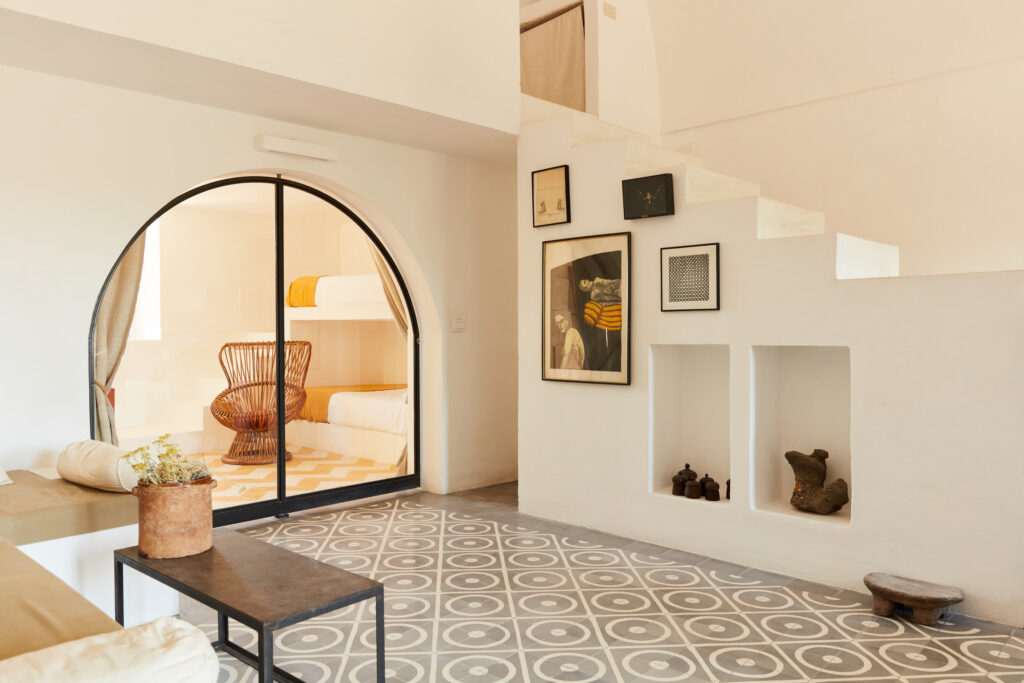
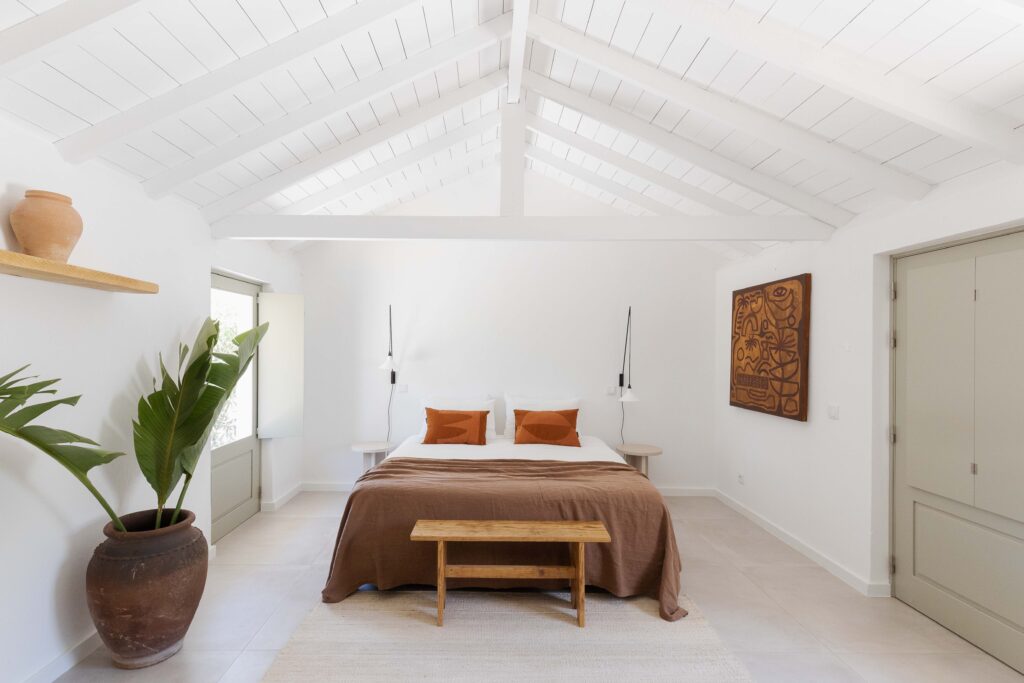
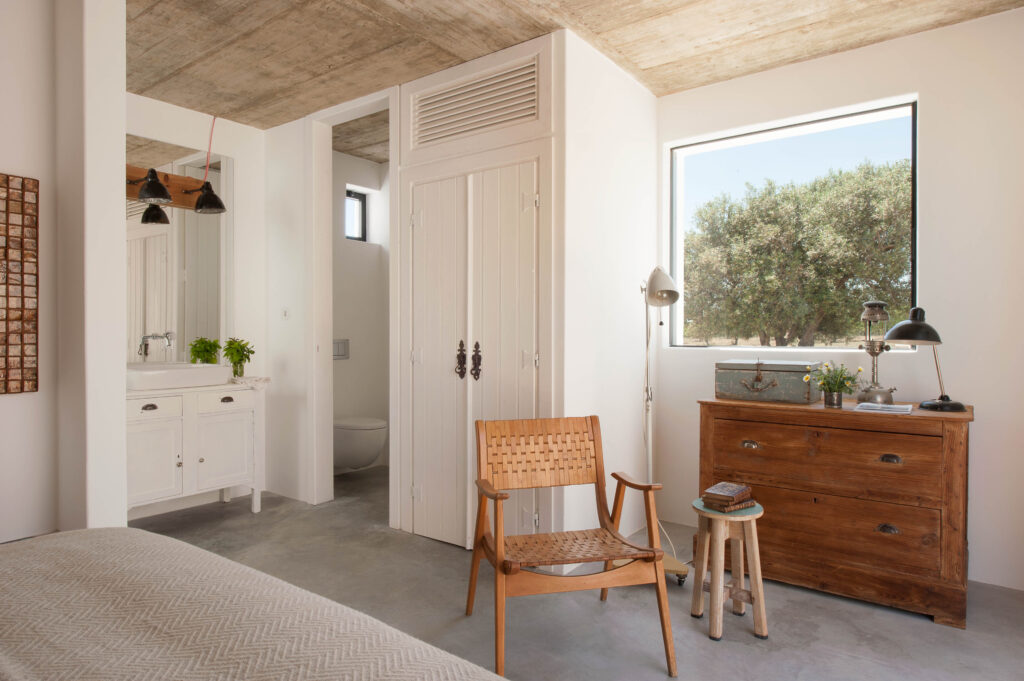
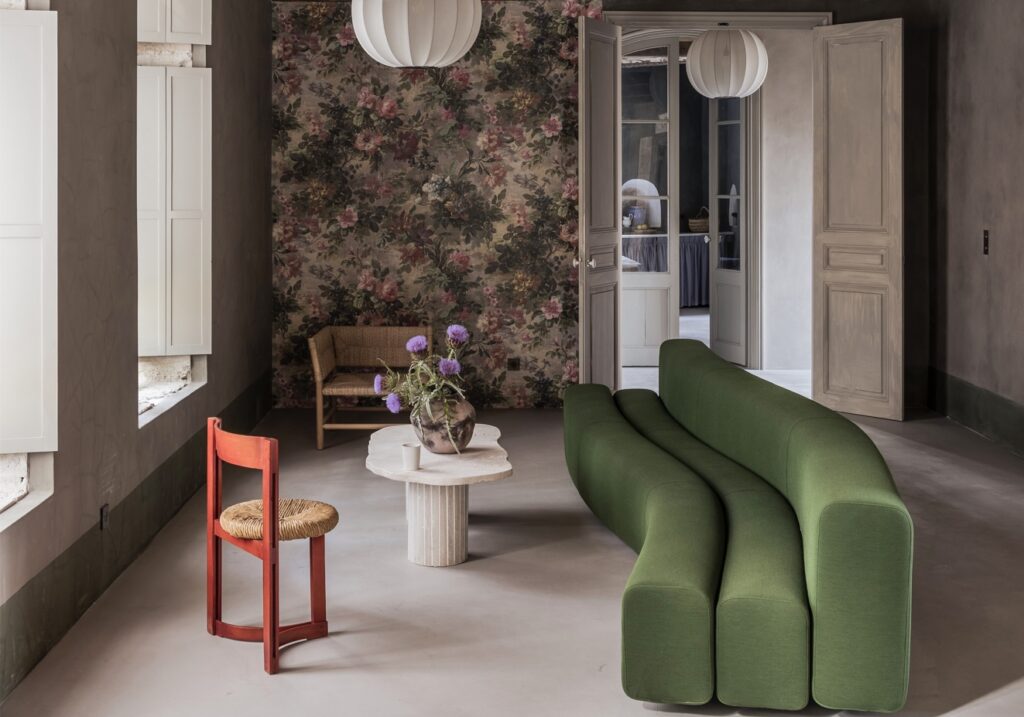
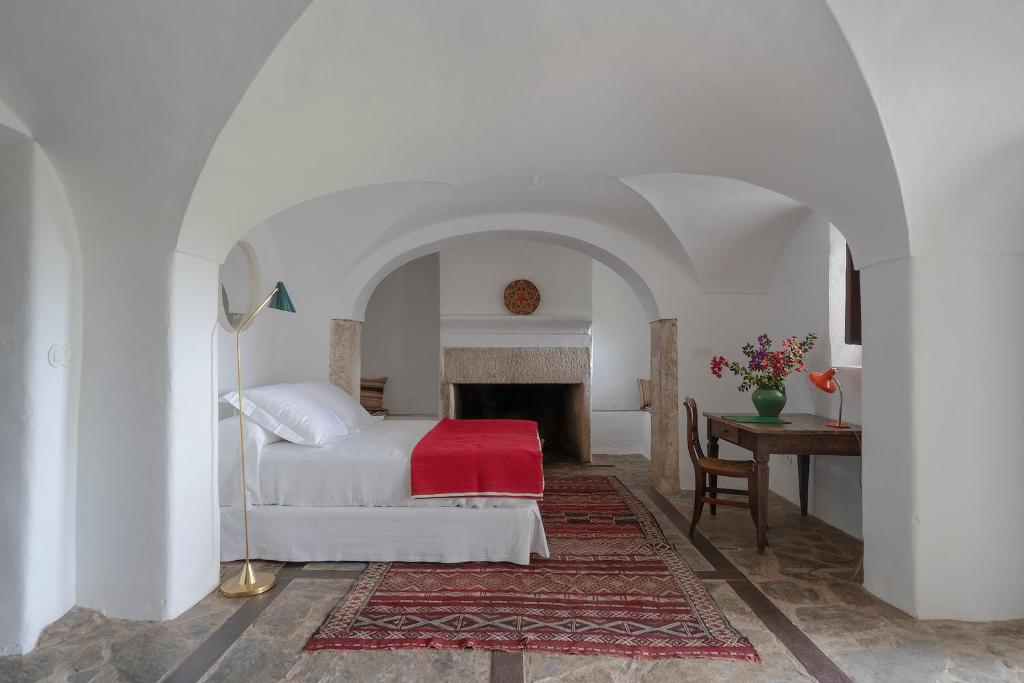
The old house and theatre became two independent suites, with the original entrance hall dividing them. Both open onto the courtyard, where the former cistern has been replaced by a slim swimming pool. New windows and skylights bring daylight into rooms once designed to stay sheltered from Fuerteventura’s sun and trade winds. During calima, when Saharan dust reaches the island, the light entering through the roof turns noticeably warmer.