

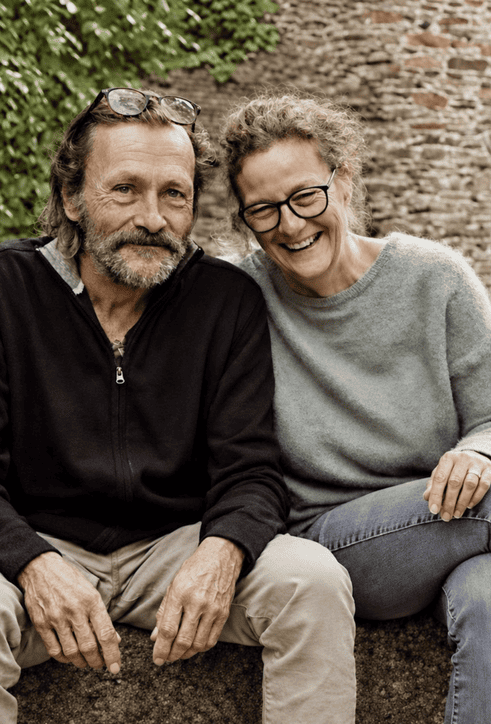
We want guests to feel surrounded by beauty, nature, calm, and a sense of authenticity that allows them to truly slow down.
What was your life like before this project began?
I grew up in Milan and on the Lago Maggiore, while my husband Konstantin grew up on the island of Stromboli in Sicily. Our childhoods were very different—mine in a vibrant city, his on a volcanic island surrounded by nature and the sea—but both shaped our sensitivity to beauty, atmosphere, and what “home” means.
We met later in Zurich, were both living a cosmopolitan and professionally active life in banking and education, but we were searching for something more meaningful and grounded. Nostalgia for Italy led us back to Sicily, on the small island of Lipari, where we opened a restaurant and fully entered the world of hospitality. During those years, our son was born, which deeply influenced how we thought about life, work, and family.
Our journey brought us to Normandy, where we discovered the place that would become Les Rochers. Restoring it felt like a natural continuation of everything we had lived before—bringing together Stromboli, Zurich and Lipari into one project of home, hospitality, and meaning.
When you first discovered Les Rochers, what made you feel this old place could become something special?
When we first discovered Les Rochers, we were immediately struck by its extraordinary setting. The house stood in the middle of open fields, completely surrounded by nature, with a profound sense of peace and isolation. At the same time, it was only a short distance from the sea, which gave the place a special balance between wild countryside and coastal beauty.
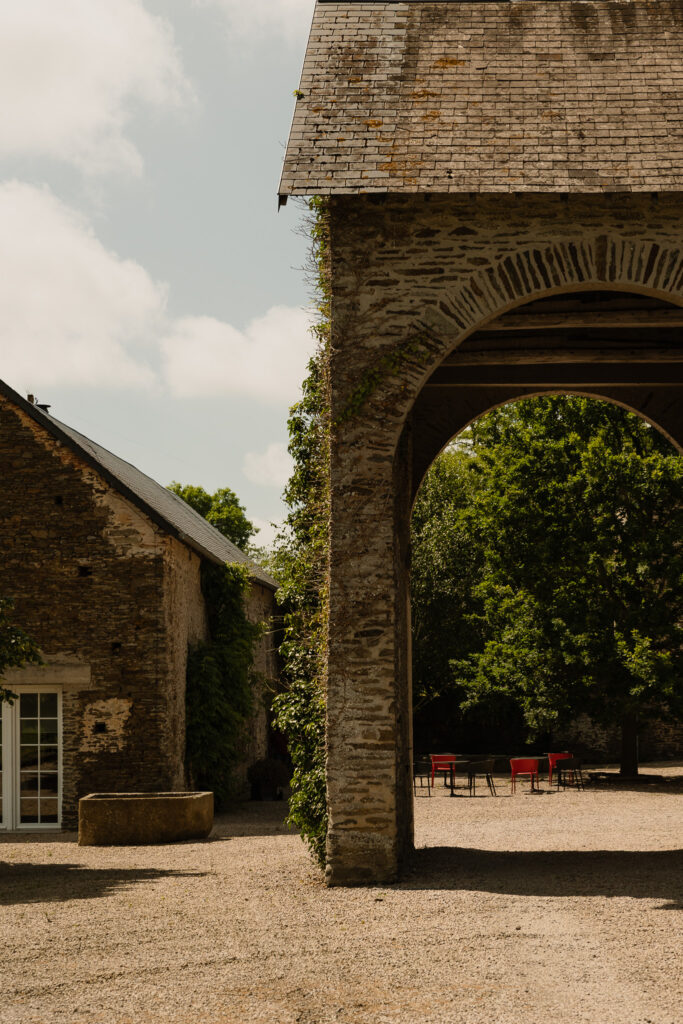
What truly captivated us was the architecture of the 16th-century noble farmhouse. The proportions, the generous volumes, and the authenticity of the building were remarkable. We could instantly imagine how this historic and secluded place could be transformed into something unique—a house where guests could experience the simplicity, beauty, and tranquility that had drawn us there in the first place.

What was the biggest challenge in bringing the project to life?
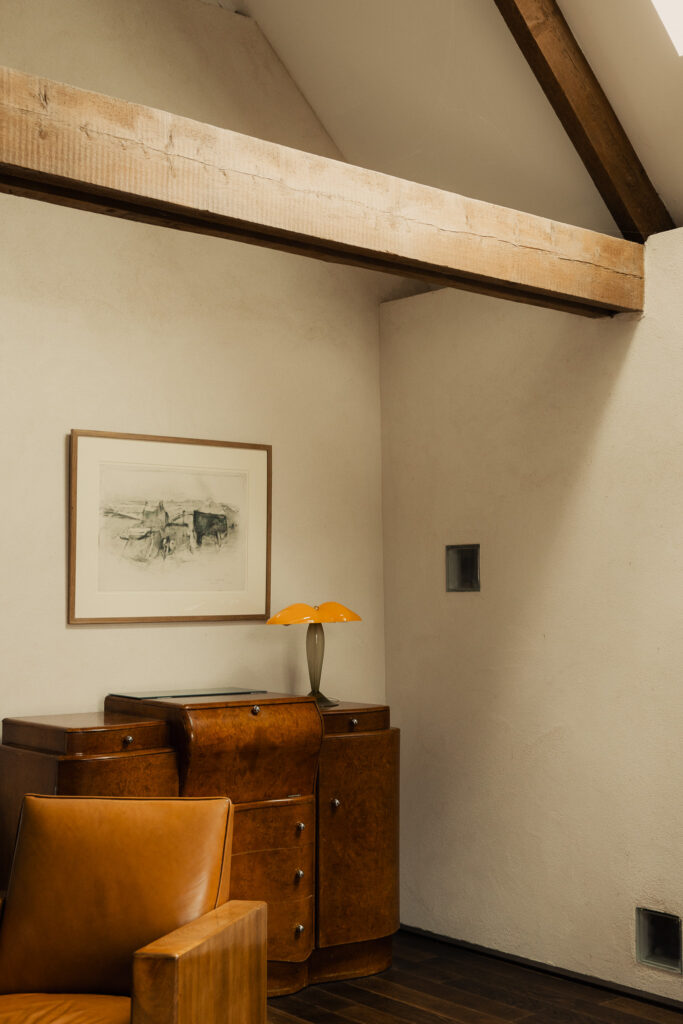
The biggest challenge was finding the right balance between preserving the soul of the house and making it livable for today. We wanted to respect the “shell” of the building—the strength of the old stone structure and the generosity of the original spaces—without losing their character through renovation. The interior design and circulation had to remain simple and natural.
Light was also essential. Normandy has an extraordinary light, soft and constantly changing, and we worked carefully on how it could enter and move through the house. In some places, we created only a few new openings, just enough to connect spaces and bring light deeper inside.
Another challenge was understanding how the house should actually be lived in. We wanted the rooms to remain generous and open, never overdesigned or divided too much. Preserving that feeling of space and calm was one of the most important parts of the project.
But the biggest challenge was doing everything as a couple, without an architect to translate or mediate our ideas. We had to bring together very different perspectives and constantly find a common direction.
In what way did you want Les Rochers to feel different from a standard hotel? What kind of experience did you want to create for guests?
We wanted Les Rochers to feel more like a private home than a standard hotel.
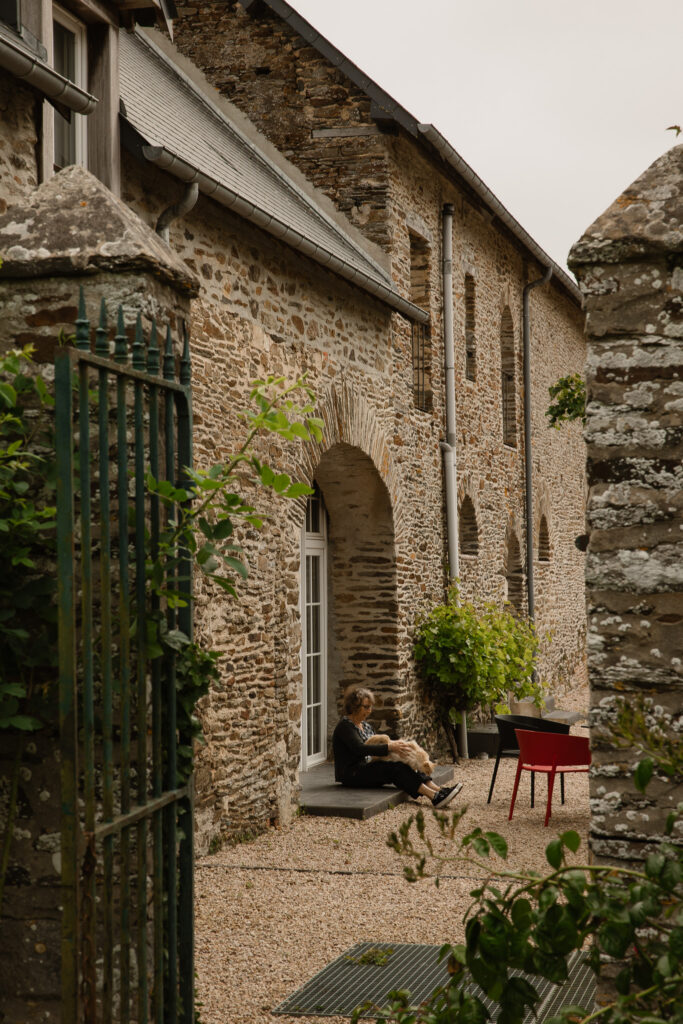
A place with warmth, freedom, and personality rather than formality. Guests can choose their own rhythm: meet other people or remain completely private. The shared kitchen, long breakfasts, dinners, and evenings on the terrace create natural moments of connection without anything feeling imposed.
Part of the experience is integrating naturally into village life: hiking to the abbey of the village, having a galette in La Bacouette, a drink in the local bar or shopping local products for the shared kitchen.
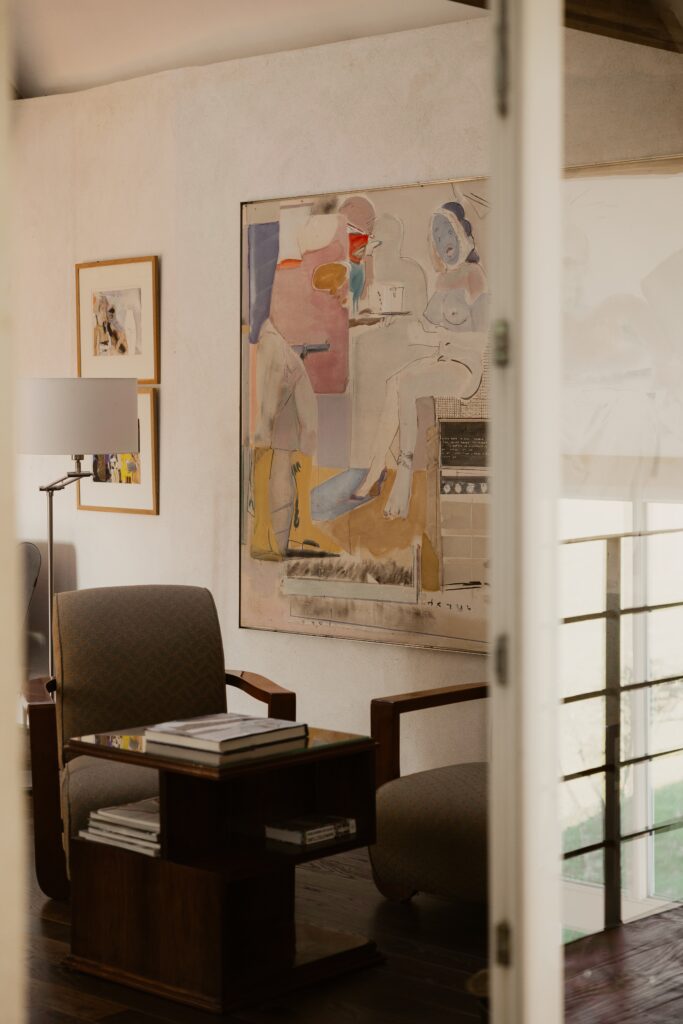
Art and beautiful objects are everywhere in the house, but never in a museum-like way—they are simply part of everyday life. We wanted guests to feel surrounded by beauty, nature, calm, and a sense of authenticity that allows them to truly slow down.
Food and shared spaces seem to be an important part of life at Les Rochers. How important was that side of the house for you?
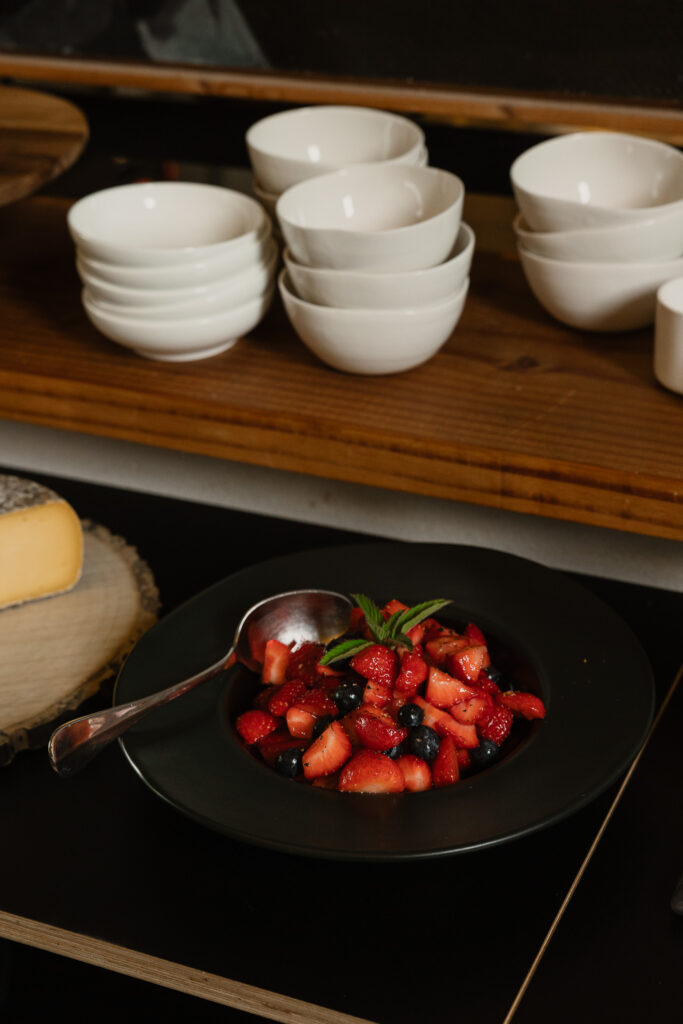
Breakfast is the real common moment of the day—everybody is there, it’s time to suggest day trips and local experiences. Through regional and seasonal products, it also becomes part of the experience of Normandy itself.
The kitchen often turns into a spontaneous meeting place, where guests share a glass of wine, cook together, or sometimes end up eating together. The weekly dinner with the chef Sébastien is more festive, almost a celebration around food and conversation. At the end of the dinner he joins the table and discusses with guests. And in the evenings, people naturally gather on the terrace, looking out over the fields and enjoying the calm of the landscape.
All these moments create a real human connection in a very natural way. They break the formality that can exist in hospitality. We wanted Les Rochers to feel like a home where people can arrive, relax, and immediately feel part of a place. Sharing breakfast, cooking in the kitchen, and sitting on the terrace in the evening make encounters happen without forcing them.
It also reflects how we like to live ourselves—simple and open ! In the end, it’s not just about food, but about creating moments where people feel present, connected, and at ease.
What do you love most about life in this part of Normandy?
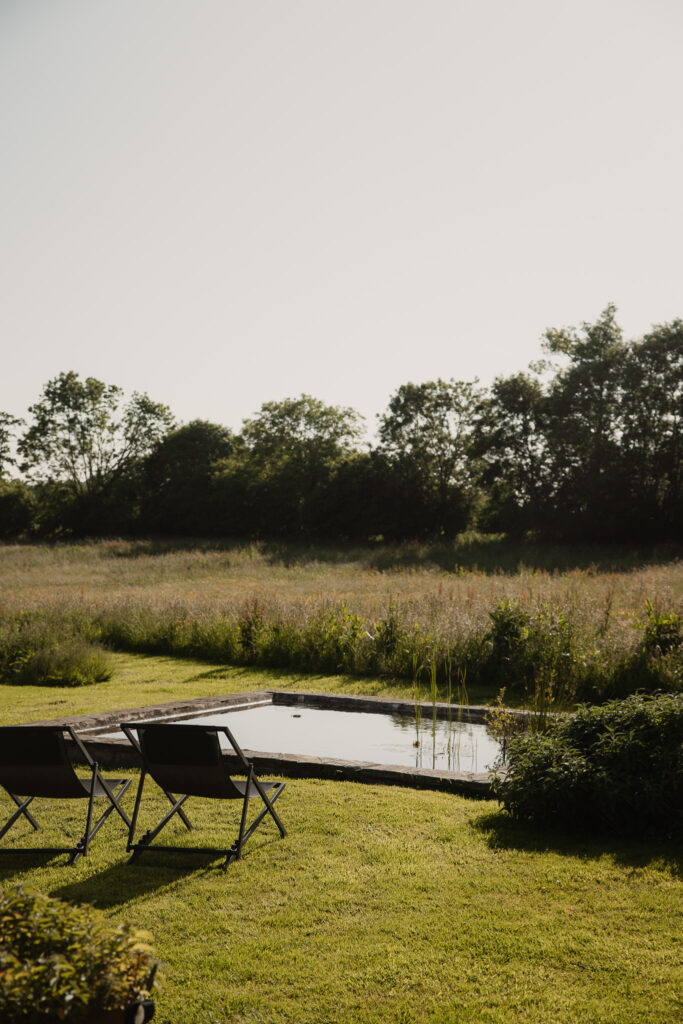
What we love most about life here is the balance between countryside and sea, calm and culture, simplicity and elegance. The region has a softness and kindness that you feel in everyday life. It is deeply connected to history—from the Vikings to WW II.
We especially love springtime, when the fields around Les Rochers are full of life and the air smells of fresh grass.
Remarkable is the diversity of Normandy: the wild landscapes of Cap de la Hague, the history of Bayeux, the Mediterranean feeling of Granville, or the elegant atmosphere of Cabourg. In summer, there are medieval festivals and many seaside events—but you can also simply stay at Les Rochers and enjoy the silence and nature.
Looking back, what did you gain by taking that risk? Would you do it again?
We gained much more than a house or a project. We created a way of life that feels meaningful and deeply personal.
There were many moments during the ten years of restoration when we did not know how to continue, but we also knew we could not go back. The project taught us patience, resilience, and trust in the process, especially when unexpected problems appeared. It also taught us that once you finally achieve something difficult, you tend to forget the hardest moments and remember mainly the beauty of what was created.
Would we do it again? Yes—absolutely, with the same passion and energy, but on a much smaller scale.
Quickfire
A dish you could eat again and again ?
Fondue (I’m still Swiss)
A simple pleasure you never get tired of ?
Looking out over the fields of Les Rochers
What's always in your suitcase ?
My computer, bookings can arrive at any time
The next destination on your list ?
Back to Rotterdam
A song that always puts you in a good mood ?
Walking on the moon by Roseaux
The most underrated place you’ve been ?
Too many to pick just one
THE ADDRESS
Les Rochers
Cerisy la Fôret – Normandy – France
French countryside · Shared dinners · Slow living