

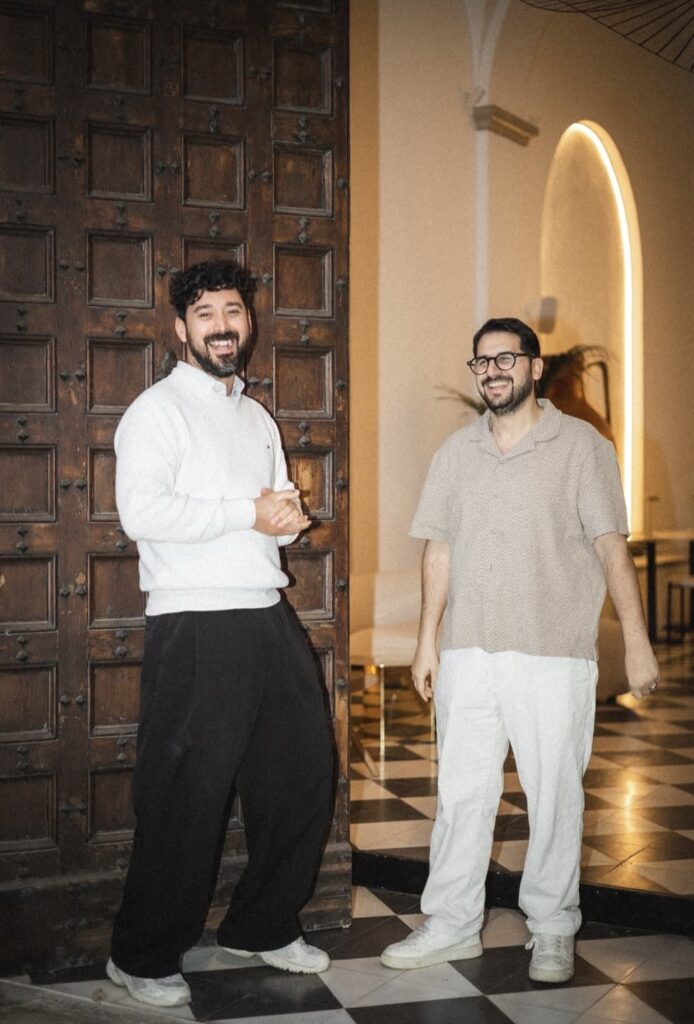
It was a radical change, and it happened quite fast. At the beginning, we were deciding between two countries: Portugal and Italy, both connected to our origins and to our personal stories. In the end, Italy won.
What was your life like before this project began ?
Before Palazzo Piccinno, our lives were very full — fast-paced, demanding, and deeply shaped by work. Marco was working in marketing for a multinational company, while I (Richard) was in performance consulting for a hotel chain. We were both in environments with a lot of competitiveness, pressure, and hard work. It was exciting in many ways, but also very intense.
At that stage, we were quite focused on building and solidifying our careers. We knew we eventually wanted to create something of our own — something more personal, more connected to hospitality, place, and people. But before taking that step, we felt we needed to gather experience, learn as much as possible, and understand the rhythm of the industry from the inside.
So, in a way, that period was a preparation. It gave us structure, discipline, and a clearer sense of what we wanted to do differently when the time came to build a project that truly belonged to us.
How did the idea for this place first come about ?
The idea had always been there, in a way. We always knew that one day we wanted to build something of our own — something more personal, where we could bring together hospitality, culture, design, and a certain way of living.
Then the pandemic arrived and shortened the decision. We were both made redundant from our jobs, and what could have felt only like a difficult moment slowly became an opening. We realised that maybe this was the opportunity to leave London and finally start building something that truly belonged to us.
It was a radical change, and it happened quite fast. At the beginning, we were deciding between two countries: Portugal and Italy, both connected to our origins and to our personal stories. In the end, Italy won.
From the moment we made the decision to the moment we received the keys to Palazzo Piccinno, around two years had passed. Looking back, it feels incredibly fast — especially compared to other friends who followed a similar path. But there was a sense of urgency, and also a sense of clarity.


What was the biggest challenge in bringing the project to life ?
The biggest challenge was definitely the location. We chose to stay in Parabita, a small town about 15 minutes from Gallipoli. It is a beautiful place, full of character and local life, but it was still almost unknown to many international travellers looking for their place in the sun.
From the beginning, we knew we did not want to create a project that felt disconnected from its surroundings. We wanted Palazzo Piccinno to respect the rhythms, customs, and everyday life of the town. But bringing people here, and creating demand for a destination that was not already on the obvious tourist map, was a real challenge.
It was not only about opening the doors of the Palazzo. It was also about building a wider experience around it. We needed to work with local restaurants, shops, producers, and other small businesses, making sure they understood the type of guests we were attracting and that they felt ready to receive them.
So the challenge was both practical and cultural: how do you invite people into a lesser-known place without changing its soul? That question has guided many of our decisions from the very beginning.
In what way did you want Palazzo Piccinno to feel different from a standard hotel ?
We never wanted Palazzo Piccinno to feel like a standard hotel. From the beginning, the idea was to create something more intimate — a house with a soul, rather than a place that simply offers rooms.
For us, hospitality is not only about comfort or service, although those things matter deeply. It is also about atmosphere, rhythm, and the feeling guests carry with them after they leave. We wanted people to feel welcomed into a real place, with its own stories, rituals, imperfections, and personality.
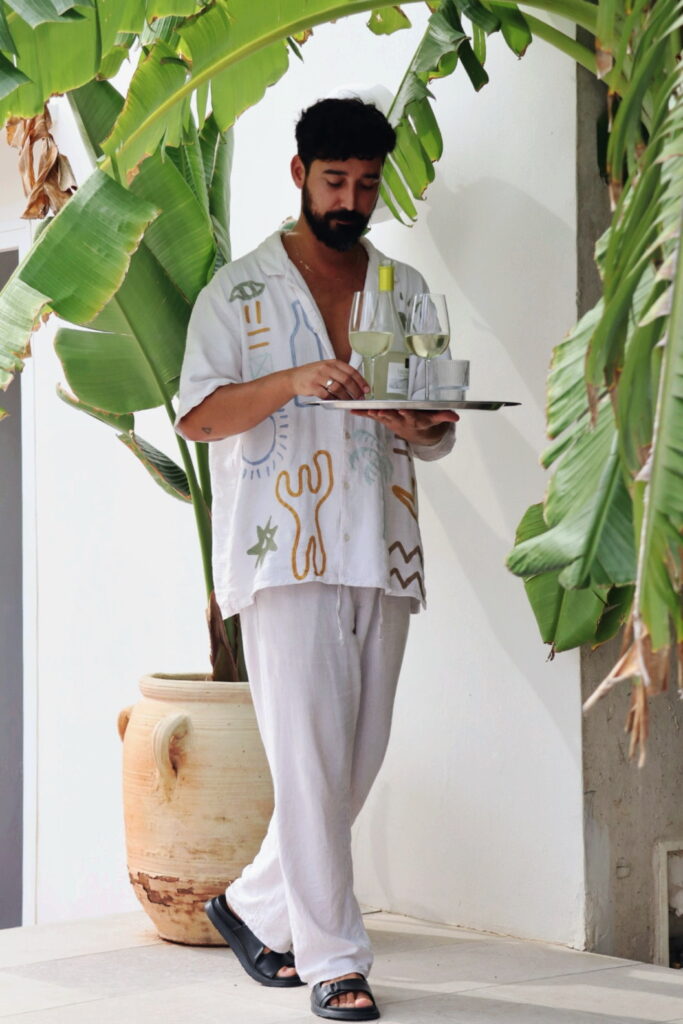
The experience we imagined was quiet, generous, and very connected to Salento. A breakfast that feels like a moment, not a buffet. A glass of wine on arrival. Conversations in the garden. Local artists, artisans, restaurants, beaches, and small discoveries that help guests understand where they are, rather than simply pass through it.
We wanted the Palazzo to feel refined, but never distant. Beautiful, but never cold. A place where guests can slow down, feel looked after, and experience Puglia in a way that feels personal, contemporary, and deeply human
What do you love most about life in Salento ?
What we love most about life in Salento is the feeling that life is still lived with a certain fullness.
Of course, there are the obvious things: the sunsets, the clear water, the food that can be incredibly simple and incredibly good at the same time. Those things are beautiful, and they still move us every day.
But what we love even more is the rhythm of life here. A full day really feels like a full day. You can wake up early, have coffee in the piazza, work, go to the market, swim in the sea, have a long conversation with a neighbour on the corner of the street, and still feel that the day has given you something.
There is also a realness to people here that we love. Life is not always polished, and that is part of its beauty. People speak, they ask questions, they share opinions, they notice things. There is a sense of presence that, in bigger cities, can sometimes disappear.

Looking back, what did you gain by taking that risk? Would you do it again?
Looking back, we feel that by taking that risk, we gained time again.
Not necessarily time in the practical sense — because the work is still intense, and sometimes even more personal — but time in a deeper way. Time to notice things. Time to understand the rhythm of a place. Time to know what grows in each season, what should be on the breakfast table in spring, what vegetables arrive in summer, what the land is offering at that exact moment.
We also gained a much deeper connection to people. To our neighbours, to local producers, to guests, to the town itself. The project gave us a reason to be present in a way that our previous lives did not always allow.
Of course, it was a risk. There were moments of doubt, and there still are. But it gave us a life that feels more connected, more intentional, and more ours.
So yes, we would do it all over again. Without a doubt.
What kind of experience did you want to create for guests ?
We hope guests remember a feeling.
Of course, we hope they remember the beauty of the house, the garden, the breakfast, the light in the rooms, the sea, and the places we sent them to discover. But more than anything, we hope they remember how it felt to be here.
That they felt welcomed, looked after, but never managed. Free to slow down, to sleep well, to have a long breakfast, to speak to someone local, to discover a corner of Puglia that still feels real.
Long after they leave, we would love Palazzo Piccinno to stay with them as a memory of a slower, more generous way of living — and perhaps as a reminder that travel can still feel personal.
Quickfire
A dish you could eat again and again ?
Cozze gratinate
A simple pleasure you never get tired of ?
Gardening
What's always in your suitcase ?
My camera
The next destination on your list ?
The carnival in Rio
A song that always puts you in a good mood ?
Anything from Olivia Dean
The most underrated place you’ve been ?
Specchia. It is one of those towns that feels almost
too beautiful to be so quiet.
THE ADDRESS
Palazzo Piccinno
Parabita – Puglia – Italy
Design-led stay · Quiet village setting · Easy coastal access