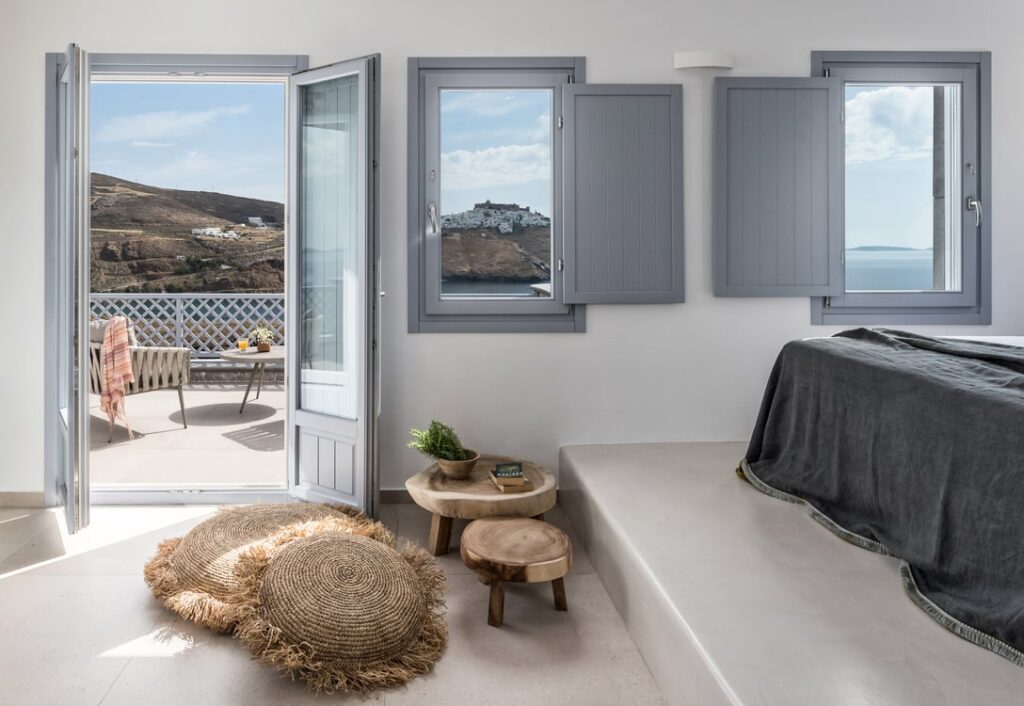
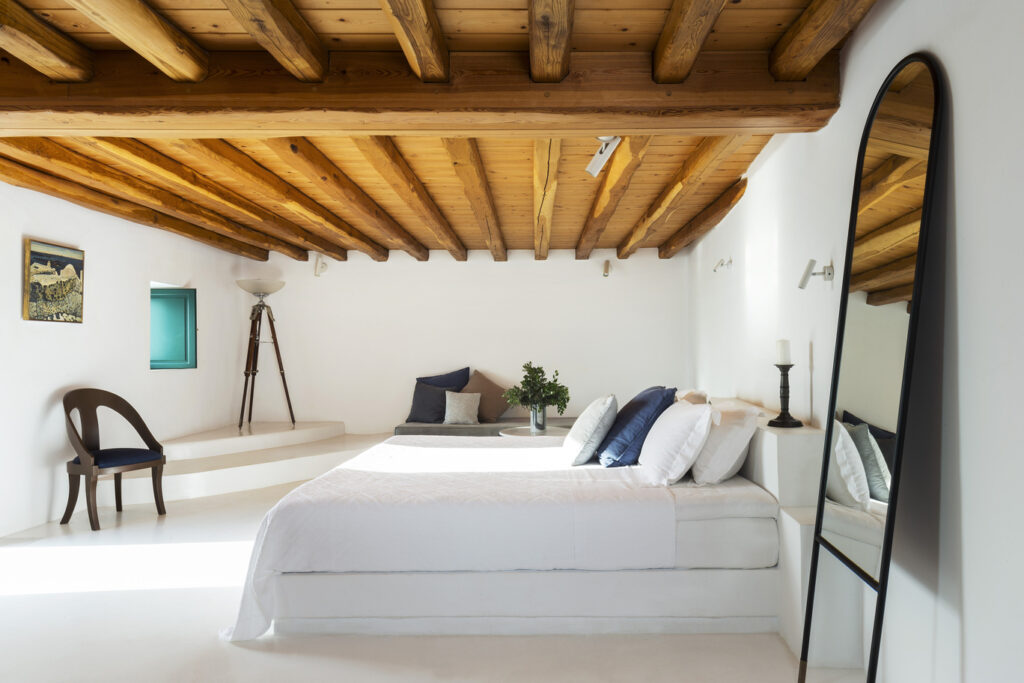
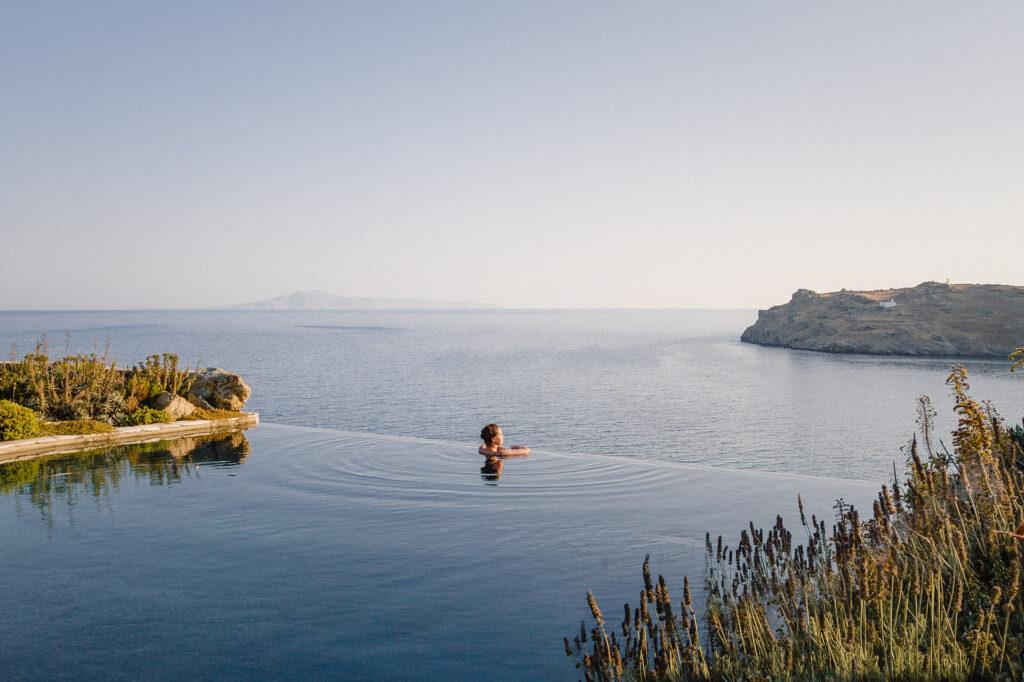
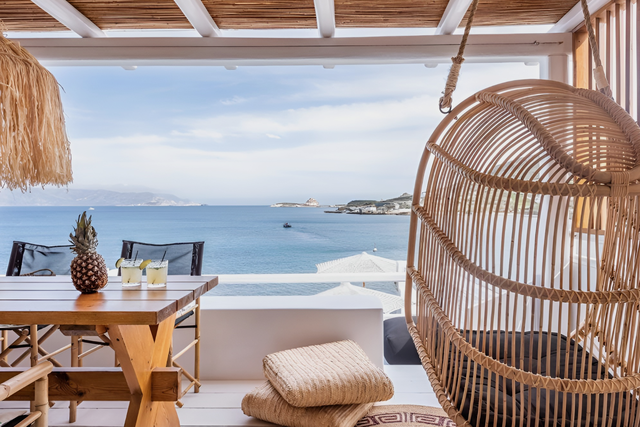
Chora is the centre of island life and is around ten minutes away by car. Its old Kastro sits on the edge of the cliff, while a series of small squares fills with tables as the afternoon heat drops. Above the village, the zigzag path to the Church of Panagia gives one of the island’s classic views and is best walked near sunset.
Folegandros’ beaches require a little more effort than those on many Greek islands. Agali is one of the easiest to reach and has seasonal tavernas nearby. From there, paths and small boats continue to Galifos and Agios Nikolaos. Livadaki sits further west and can be reached by boat or on foot. Katergo, on the southern coast, is usually approached by boat from Karavostasis, though experienced walkers can reach it overland. Shade and facilities are limited at many beaches, so water, food and an umbrella are worth carrying.
Walking is one of the best ways to understand the island. Around 20 kilometres of marked paths follow old routes between farms, chapels, dry-stone terraces and isolated bays. Several start around Ano Meria and descend towards the western coast. The distances may look modest, but summer heat, wind and the climb back should be taken seriously.
Karavostasis is the port and the arrival point for every visitor, since Folegandros has no airport. Ferries connect the island with Piraeus, Santorini, Milos and other Cycladic islands, with frequency varying considerably through the year. Santorini and Milos are the closest practical airport connections.
A car or scooter makes the stay much easier. The island bus connects the principal settlements and selected beaches in summer, though having your own transport gives more freedom for early walks, late dinners and changing plans with the wind.