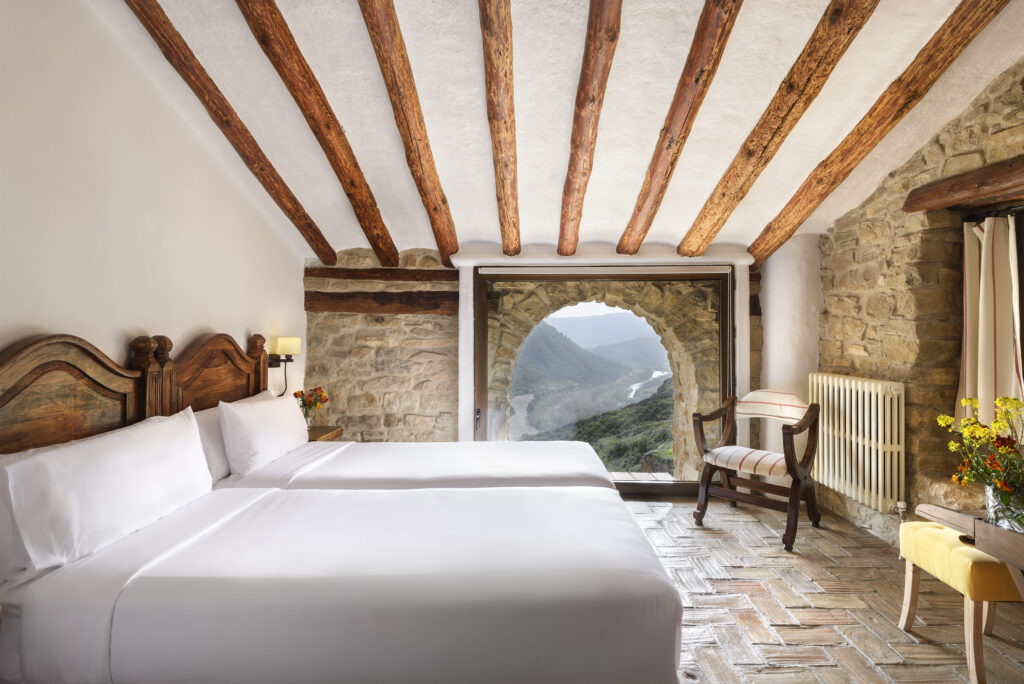
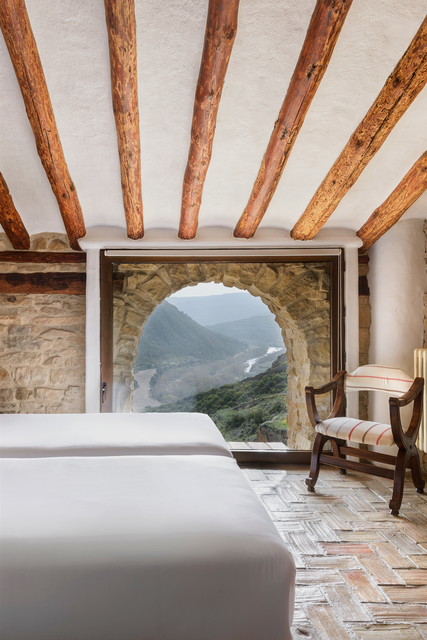
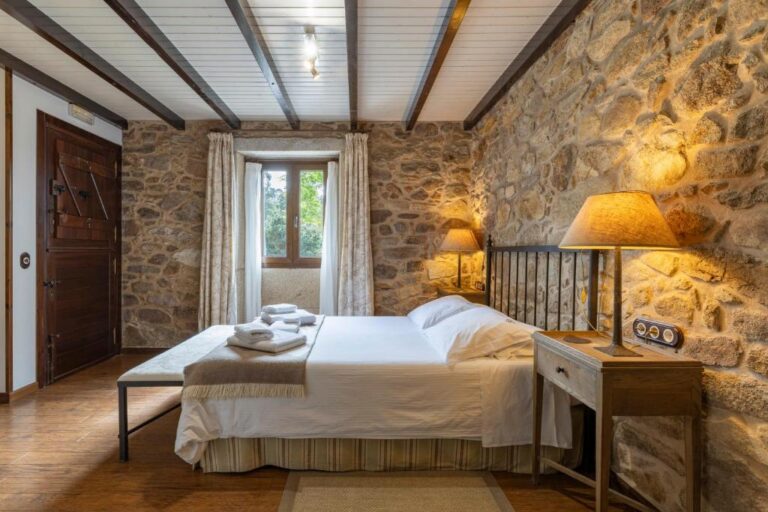
Solo Palacio, Asturias · Heredad Beragu, Navarra · ROLA at Hotel Nafarrola, Basque Country
Northern Spain is the green, Atlantic side of the country. Lighthouses and rías in Galicia, cider houses and mountain villages in Asturias, fishing ports and pintxos bars in the Basque Country, vineyards and hilltop villages in Rioja Alavesa and Navarra. It rains a little, eats very well, and rarely feels like the Spain on postcards.
Our selection of boutique hotels in Northern Spain follows that coast and its valleys: six small, independent places, most of them restored by the people who still run them. A stone hamlet on the Costa da Morte, an Indiano house above Luarca, a palace in the Asturian mountains, a Basque farmhouse with a Michelin-listed kitchen, a palace in Rioja wine country and a village retreat in Navarra.
The Romans thought the world ended here. Sail west from Finisterre and you would fall where the sun sinks. Further east, behind the Picos de Europa, Asturias calls itself the cradle of Spain, and the Basques and Navarrese speak Euskera, a language so old nobody knows where it came from.
What ties the north together is the Cantabrian Sea, the rain that keeps everything green, and a table culture taken very seriously: octopus and Albariño, fabada and cider, pintxos and txakoli. Distances are short, roads are beautiful, and every region feels like a small country of its own.
The far northwest corner of Spain: 1,600 km of coast cut into rías, granite villages, stone granaries on stilts and a sea that has wrecked enough ships to name a whole coastline after them, the Costa da Morte. Inland, the Camino ends in Santiago de Compostela.
Come for the light at Finisterre, barnacles and pulpo á feira, a glass of Albariño and the feeling of being at the edge of Europe. Pack a raincoat; it is part of the charm.
Don't miss
Sunset at Finisterre · the Camiño dos Faros lighthouse trail · Cíes Islands and Rodas beach · Santiago de Compostela’s old town
Where to stay in Galicia
Countryside
Lugar do Cotariño
Camariñas - Spain
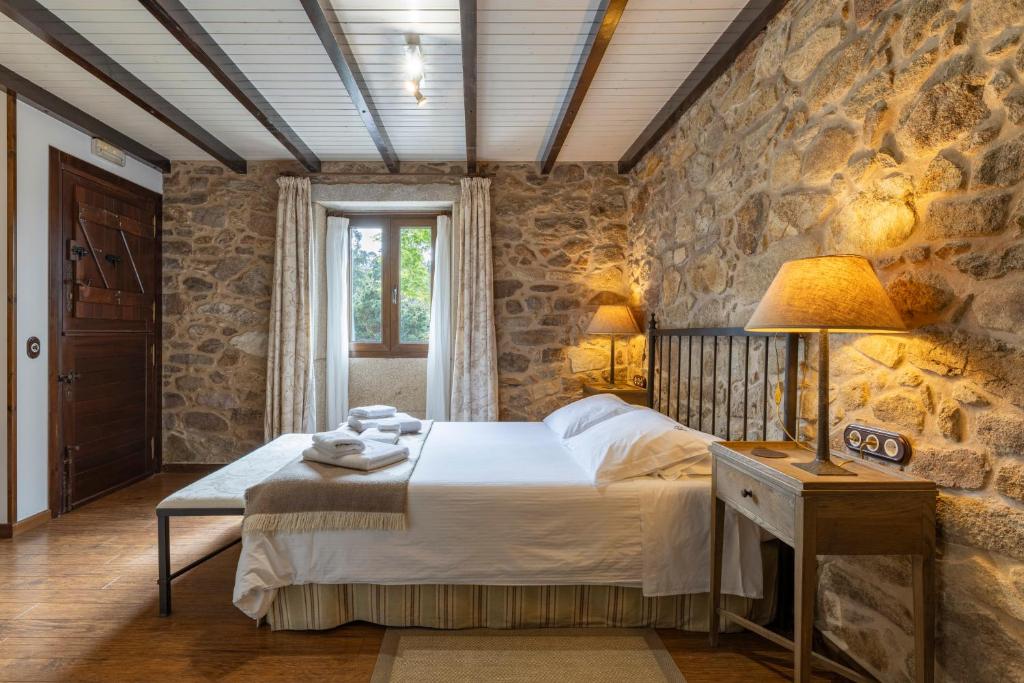
On the Costa da Morte, three restored stone houses around a garden with a stream and two hórreos. Seven rooms, each named after a seabird, and a hearth that has burned since 1713.
The north of the north. Green meadows run straight into the Cantabrian Sea, fishing towns like Luarca and Cudillero climb the hillsides, and the Picos de Europa hide wolves, bears and glacial lakes a short drive inland.
This is cider country: poured from high above the glass, drunk in one gulp, best with fabada, cachopo and a wedge of Cabrales. Spring and autumn are made for walking; summer for some of Spain’s best beaches.
Don't miss
Gulpiyuri, the inland beach · Bufones de Pría · the Senda del Oso greenway · Luarca’s harbour and white cemetery above the sea
Where to stay in Asturias
Countryside
Hotel Rural 3 Cabos
El Vallín - Spain
A restored Indiano house above Luarca, facing three headlands and the sea. Nine rooms, a glass lounge with fireplaces, and dinner from the hotel’s own organic garden.
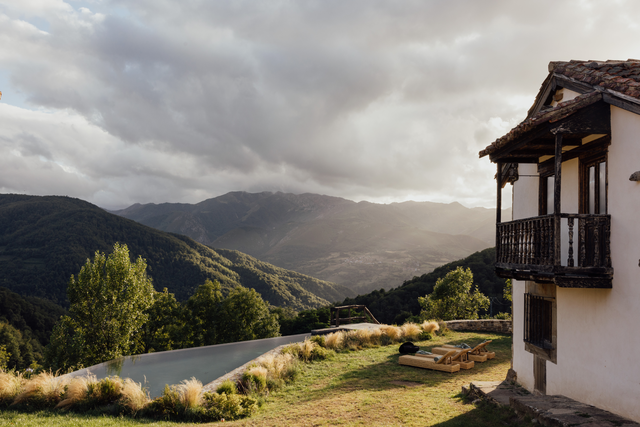
Eleven wabi-sabi apartments in a centuries-old palace at 1,000 metres, inside the Las Ubiñas-La Mesa Natural Park. Dinner by the team of Michelin-starred Monte.
The País Vasco has its own language, its own sports and arguably the best food culture in Europe. On the coast, Urdaibai’s estuary, Mundaka’s famous wave and the stone steps of Gaztelugatxe; in the cities, the Guggenheim in Bilbao and the pintxos bars of San Sebastián.
An hour and a half south, the landscape turns to vines. Rioja Alavesa, the Basque side of Rioja, is a string of walled villages and wineries designed by Gehry and Calatrava, best explored slowly, by e-bike.
Don't miss
San Juan de Gaztelugatxe early in the morning · Bermeo’s fishing port · Gernika · Laguardia’s underground cellars · Marqués de Riscal in Elciego
Where to stay in the Basque Country
Food Lovers
Hotel Nafarrola
Bermeo - Spain
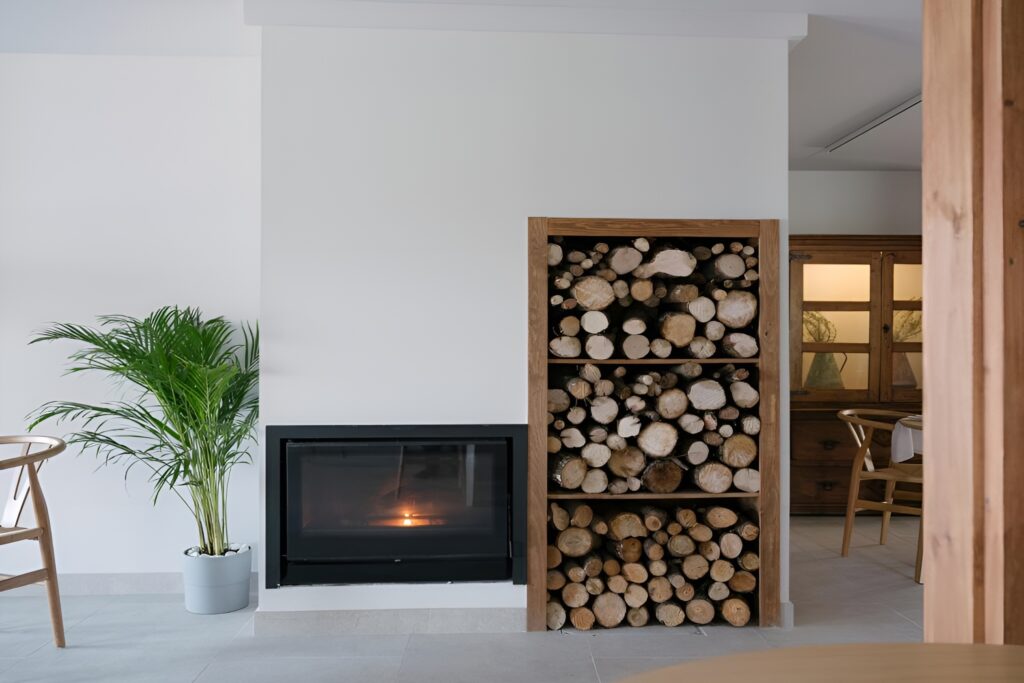
A restored farmhouse above Bermeo, run by two brothers from the town. Eight suites with hydromassage baths among the green hills of Urdaibai, and ROLA, a Michelin-listed kitchen.
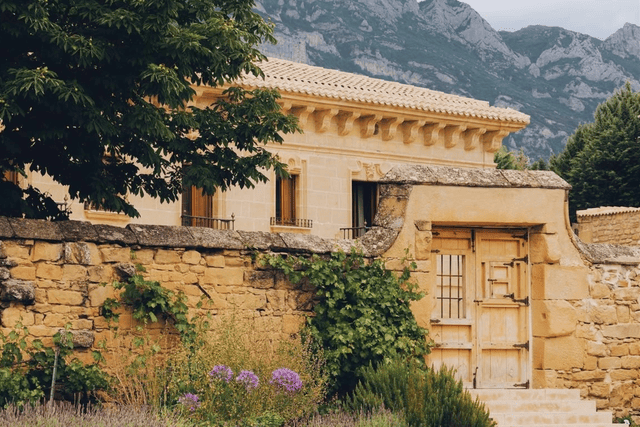
A listed palace in a stone village of Rioja Alavesa, restored by Edmond de Rothschild Heritage. Nine rooms named after grape varieties, art from Ariane de Rothschild’s travels, and vineyards at the edge of town.
Navarra goes far beyond San Fermín. In the north, the Irati beech forest, one of the largest in Europe; in the south, the Bardenas Reales, a desert of clay and sandstone that feels closer to Africa than to the Pyrenees.
In between, hilltop villages, Romanesque churches, and an orchard famous across Spain for artichokes, asparagus and piquillo peppers. Autumn is our favourite season here.
Don't miss
The Bardenas Reales by 4×4 · Olite’s castle · Ujué and Sangüesa · birdwatching over the Foz Verde
Where to stay in Navarra
To get lost
Heredad Beragu
Gallipienzo Antiguo - Spain
Four old village houses restored with recovered stone and timber, in a hilltop village of barely 100 people. Nine rooms facing the Kaparreta Nature Reserve, hosted by Patxi and Ramón.
May, June and September: long days, mild temperatures and few crowds. July and August are warm and lively but busy along the coast, especially in Asturias and San Sebastián, and around San Fermín in Pamplona. Autumn brings colour to the forests and the grape harvest to Rioja. Rain can come in any month, so pack a light waterproof.
J
F
M
A
M
J
J
A
S
O
N
D
Best
Good
Quiet, wetter, some hotels closed
HOW TO GET THERE
Santiago de Compostela, A Coruña and Vigo serve Galicia; Asturias Airport sits on the coast near Avilés; Bilbao is the main gateway to the Basque Country, with Pamplona for Navarra. From France, the A-8 motorway follows the whole Cantabrian coast.
A car is the best way to travel: most of our stays are in villages or valleys, and the coastal roads are half the pleasure. Fly into one end, out of the other.
GOOD TO KNOW
Several stays close in winter (3 Cabos from mid-December to mid-March). Dinner in rural hotels is often for guests only and should be booked ahead.