Boutique hotels and small stays, from Galicia to the Basque Country
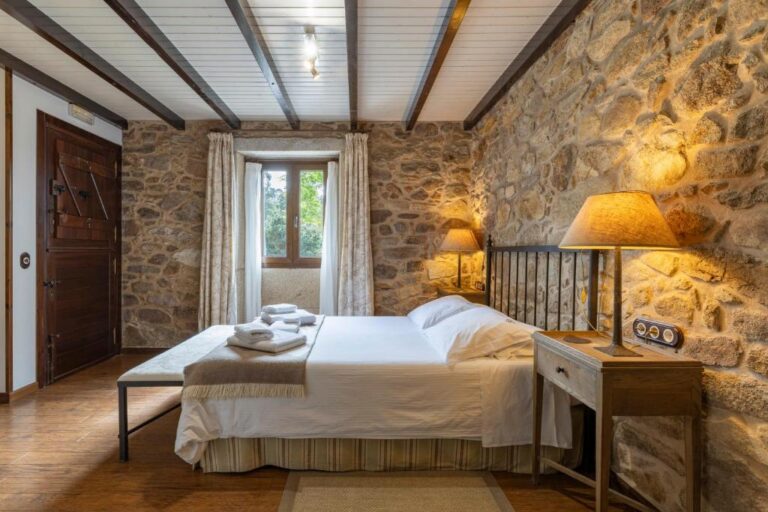
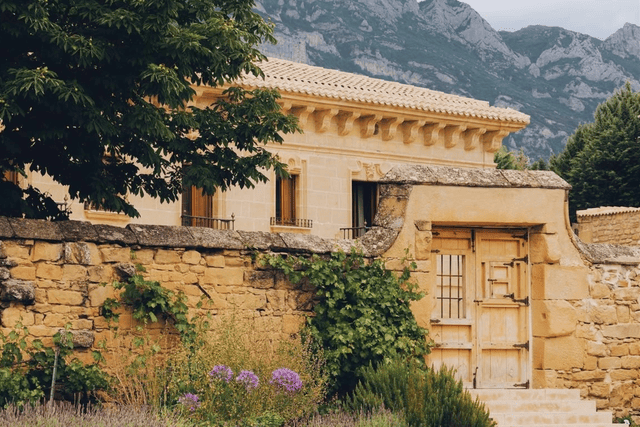
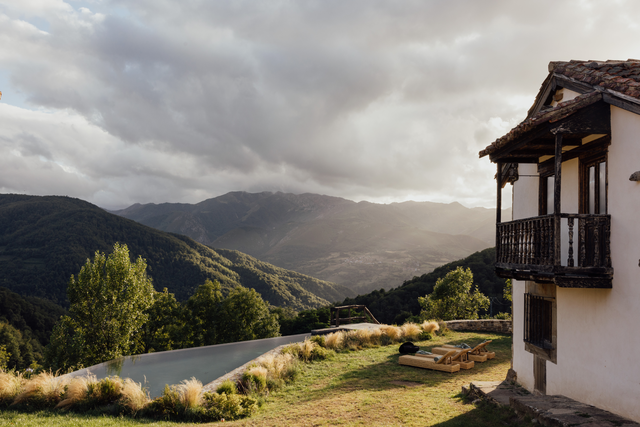
Solo Palacio, Asturias · Heredad Beragu, Navarra · ROLA at Hotel Nafarrola, Basque Country
Green, Atlantic and a little rainy, the north is Spain’s other half: lighthouses and rías, cider houses and pintxos bars, hilltop villages and rows of vines. It rarely looks like the Spain on postcards.
Inland Galicia
Small fields, stone walls and a river below
THE STORY
The other Spain
The Romans thought the world ended here. Sail west from Finisterre, their Finis Terrae, and you would fall where the sun sinks. Further east, behind the Picos de Europa, Asturias calls itself the cradle of Spain: it was here, at Covadonga, that the Christian reconquest began in the eighth century. And the Basques and Navarrese speak Euskera, a language so old nobody knows where it came from.
For centuries the north looked to the sea rather than to Madrid. Basque whalers sailed as far as Newfoundland, Galician fishermen worked one of the most dangerous coasts in Europe, and in the nineteenth century thousands of Asturians left for Cuba and Mexico, coming home rich enough to build the colourful Indiano houses that still stand above the fishing towns.
What ties the north together is the Cantabrian Sea, the rain that keeps everything green, and a table culture taken very seriously: octopus and Albariño, fabada and cider, pintxos and txakoli. Distances are short, roads are beautiful, and every region feels like a small country of its own.
THE REGIONS
From the Atlantic to the Pyrenees
Four regions along one coast, best travelled slowly from west to east: the granite edge of Galicia, the green meadows of Asturias, the Basque coast and its wine country, and the hills and desert of Navarra.
The far northwest corner of Spain: 1,600 km of coast cut into rías, granite villages, stone granaries on stilts and a sea that has wrecked enough ships to name a whole coastline after it, the Costa da Morte. Inland, the Camino ends in Santiago de Compostela.
Watch the sun set at Finisterre, walk a stretch of the Camiño dos Faros, the lighthouse trail along the Costa da Morte, and take the boat to the Cíes Islands for Rodas beach. Keep an evening for Santiago’s old town, a plate of percebes and a glass of Albariño.
Galicia is also Spain’s great seafood coast. In the rías, mussel rafts float on the water, and the bars of the old towns serve octopus on wooden plates with a bowl of white Ribeiro. Inland, the countryside is a patchwork of small fields, chestnut woods and stone villages, and the terraced vineyards of the Ribeira Sacra drop steeply to the river Sil.
Finisterre
The last lighthouse before the Atlantic
Santiago de Compostela
Where the Camino ends, after hundreds of kilometres on foot
Where the Camino ends, after hundreds of kilometres on foot
Mussels and barnacles on the rocks at low tide
Sea and mountains
Asturias
The north of the north. Green meadows run straight into the Cantabrian Sea, fishing towns like Luarca and Cudillero climb the hillsides, and the Picos de Europa hide wolves, bears and glacial lakes a short drive inland.
Find Gulpiyuri, a beach with no sea in sight, watch the Bufones de Pría throw spray through the cliffs on a rough day, and cycle the Senda del Oso greenway. In the evening, cider is poured from high above the glass and drunk in one gulp, best with a wedge of Cabrales.
Inland, the valleys are dotted with hórreos and small villages where time moves slowly. Covadonga, with its sanctuary set into the rock and the lakes above it, is the heart of the Picos. Along the coast, the Indiano houses built by emigrants returning from the Americas still stand out in pink, blue and ochre above towns like Luarca and Colombres.
Cudillero
A fishing village climbing straight up from its harbour
Lagos de Covadonga, Picos de Europa
Glacial lakes an hour inland from the sea
Sidra
Autumn apples, pressed into the cider poured from above the glass
Coast, pintxos and wine
Basque Country & Rioja Alavesa
The País Vasco has its own language, its own sports and arguably the best food culture in Europe. On the coast, the Urdaibai estuary, Mundaka’s famous wave and the stone steps of Gaztelugatxe; in the cities, the Guggenheim in Bilbao and the pintxos bars of San Sebastián.
An hour and a half south, the landscape turns to vines. Rioja Alavesa, the Basque side of Rioja, is a string of walled villages above the vineyards. Go down into the underground cellars of Laguardia, see Gehry’s Marqués de Riscal in Elciego, and explore slowly, by e-bike.
Bilbao has reinvented itself around the Guggenheim and its river, while San Sebastián remains the place to eat, with one of the highest concentrations of Michelin stars in the world and a pintxos bar on every corner of the Parte Vieja. Between the two, fishing ports like Getaria, Lekeitio and Bermeo keep the coast’s older rhythm: grilled fish and a glass of txakoli on the harbour.
San Juan de Gaztelugatxe
241 steps to a chapel on a rock. Go early.
La Concha, San Sebastián
Striped tents on the city beach, the island of Santa Clara offshore.
Rioja Alavesa
The Basque side of Rioja, best seen by e-bike.
A kingdom within a kingdom
Navarra
Navarra goes far beyond San Fermín. In the north, the Irati beech forest, one of the largest in Europe; in the south, the Bardenas Reales, a desert of clay and sandstone. In between, hilltop villages, Romanesque churches and orchards famous for artichokes, asparagus and piquillo peppers.
Cross the Bardenas by 4×4, climb the towers of Olite’s castle, walk the lanes of Ujué and Sangüesa, and watch the vultures circle over the Foz de Lumbier. Autumn is our favourite season here.
Pamplona is a lively, walkable city outside the week of San Fermín, with its old walls and the pintxos bars of Calle Estafeta. To the north, the Baztan valley is all white farmhouses and green meadows; to the south, the Ribera grows the vegetables that end up on tables across Spain, from white asparagus to piquillo peppers.
Bardenas Reales
A desert of clay closer to Africa than the Pyrenees.
Irati Forest
One of the largest beech forests in Europe.
Olite
A royal castle of towers and battlements.
Eat & drink
It’s hard to eat badly here
In the north, eating is the main activity and everything else fits around it. Octopus and Albariño in Galicia, fabada and cider poured from above the head in Asturias, pintxos and txakoli in the Basque Country, artichokes and piquillo peppers from the orchards of Navarra.
Many of our hosts cook with what grows in their own garden, and dinner in a rural hotel is often the best meal of the trip. Book it when you book the room.
Fabada, Asturia
White beans, chorizo and morcilla, slow-cooked for hours.
Pulpo á feira, Galicia
Boiled whole, cut with scissors, dusted with paprika.
Burnt cheesecake, Basque Country
Dark on top, almost liquid inside
Piquillo peppers, Navarra
Roasted, stuffed, and grown in the orchards of the Ebro.
Eat & Drink
A table in every region
Galicia
Octopus with potatoes, paprika and olive oil, barnacles from the rocks, Padrón peppers. Drink Albariño.
Asturias
Fabada bean stew, cachopo and Cabrales cheese. Drink natural cider, poured from high above the glass.
Basque country
Pintxos, marmitako tuna stew and Basque cheesecake. Drink txakoli on the coast, Rioja Alavesa inland.
Navarra
Artichokes, asparagus and piquillo peppers from the orchard, txistorra and a grilled txuletón. Drink Navarra red.
BEST TIME TO VISIT NORTHERN SPAIN
May, June and September: long days, mild temperatures and few crowds. July and August are warm and lively but busy along the coast, especially in Asturias and San Sebastián, and around San Fermín in Pamplona. Autumn brings colour to the forests and the grape harvest to Rioja. Rain can come in any month, so pack a light waterproof.
J
F
M
A
M
J
J
A
S
O
N
D
Best
Good
Quiet, wetter, some hotels closed
HOW TO GET THERE
Santiago de Compostela, A Coruña and Vigo serve Galicia; Asturias Airport sits on the coast near Avilés; Bilbao is the main gateway to the Basque Country, with Pamplona for Navarra. From France, the A-8 motorway follows the whole Cantabrian coast.
A car is the best way to travel: most of our stays are in villages or valleys, and the coastal roads are half the pleasure. Fly into one end, out of the other.